Dec 1, 2021 | ADVOCACY, HEALTHY PLAY, YOUTH GAMBLING
Read the original article on The BASIS website.
By: Karen Amichia
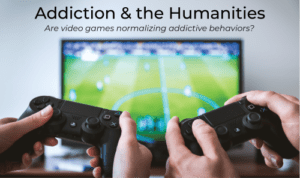 Approximately 155 million Americans play video games - just under half the population of the United States. Video game players are commonly stereotyped as a pre-pubescent or teenage boy who stays up too late on a school night indulging in gameplay. However, the average age of a gamer in the United States is 35, and only 29% of all gamers are younger than 18. Over time, video games have become more and more “adult” themed to match the consumer base. Unfortunately this “adultification” has led to increased presence of alcohol, tobacco, and other substance use and gambling content in video games, all of which are usually related to character development or impact gameplay. The pervasiveness and portrayal of substance use and gambling in video games may have implications for video game industry stakeholders and consumers - especially children.
Video Games & Alcohol
Some prominent video game characters seem particularly inclined to drink, and they drink to excess more often than not. Grand Theft Auto, Red Dead Redemption, and Sea of Thieves feature prominent characters consuming alcohol excessively. These characters are often unable to control themselves, act belligerent, and are shown stumbling around. Games sometimes mimic the effects of being intoxicated by slowing character movement and blurring the edges of the gameplay screen.
Some video games go so far as to reward gamers for their virtual drinking activity. In the game The Red Strings Club, players are able to use alcohol (e.g., pouring other characters drinks) in order to manipulate other characters’ moods. In other games - Fallout, This War of Mine, Prey - drinking alcohol can actually give brief boosts to stats (e.g., strength and charisma), make characters less sad, and reduce a player’s fear status to enable better vision and accuracy. Drinking is often central to a character’s personality or superpowers. For example, video games like Stardew Valley, Bioshock Infinite, and Firewatch each have main characters who show signs of alcohol use disorders. Mortal Kombat X boasts a character whose entire fighting style is the “drunken master” - his special moves include chugging the drink he carries around, belching, farting, and even vomiting on the opponent.
Alcohol content is common in video games that adolescents play. A study based in the United Kingdom found that 17 of the 32 best-selling video games featured alcohol or tobacco content during gameplay. Sixty percent of adolescents surveyed had played at least one of these games. However, the Pan European Game Information (PEGI) system did not report any alcohol content within the games. The PEGI creates accurate, age-appropriate ratings for video games in Europe and informs consumers about the adult content contained within each game. If the PEGI is failing to accurately report this adult content, more children are able to access it. This is concerning because this study also found that adolescents who played at least one of these games were more likely to have ever used alcohol or tobacco than their peers who had not engaged with any of these games.
Video Games & Tobacco
The tobacco industry has a long history of partnering with video game companies for promotional purposes. Even after the implementation of several restrictions limiting the use of video games as marketing tools for the tobacco industry, there still remain countless depictions of tobacco throughout modern-day video games.
Approximately 155 million Americans play video games - just under half the population of the United States. Video game players are commonly stereotyped as a pre-pubescent or teenage boy who stays up too late on a school night indulging in gameplay. However, the average age of a gamer in the United States is 35, and only 29% of all gamers are younger than 18. Over time, video games have become more and more “adult” themed to match the consumer base. Unfortunately this “adultification” has led to increased presence of alcohol, tobacco, and other substance use and gambling content in video games, all of which are usually related to character development or impact gameplay. The pervasiveness and portrayal of substance use and gambling in video games may have implications for video game industry stakeholders and consumers - especially children.
Video Games & Alcohol
Some prominent video game characters seem particularly inclined to drink, and they drink to excess more often than not. Grand Theft Auto, Red Dead Redemption, and Sea of Thieves feature prominent characters consuming alcohol excessively. These characters are often unable to control themselves, act belligerent, and are shown stumbling around. Games sometimes mimic the effects of being intoxicated by slowing character movement and blurring the edges of the gameplay screen.
Some video games go so far as to reward gamers for their virtual drinking activity. In the game The Red Strings Club, players are able to use alcohol (e.g., pouring other characters drinks) in order to manipulate other characters’ moods. In other games - Fallout, This War of Mine, Prey - drinking alcohol can actually give brief boosts to stats (e.g., strength and charisma), make characters less sad, and reduce a player’s fear status to enable better vision and accuracy. Drinking is often central to a character’s personality or superpowers. For example, video games like Stardew Valley, Bioshock Infinite, and Firewatch each have main characters who show signs of alcohol use disorders. Mortal Kombat X boasts a character whose entire fighting style is the “drunken master” - his special moves include chugging the drink he carries around, belching, farting, and even vomiting on the opponent.
Alcohol content is common in video games that adolescents play. A study based in the United Kingdom found that 17 of the 32 best-selling video games featured alcohol or tobacco content during gameplay. Sixty percent of adolescents surveyed had played at least one of these games. However, the Pan European Game Information (PEGI) system did not report any alcohol content within the games. The PEGI creates accurate, age-appropriate ratings for video games in Europe and informs consumers about the adult content contained within each game. If the PEGI is failing to accurately report this adult content, more children are able to access it. This is concerning because this study also found that adolescents who played at least one of these games were more likely to have ever used alcohol or tobacco than their peers who had not engaged with any of these games.
Video Games & Tobacco
The tobacco industry has a long history of partnering with video game companies for promotional purposes. Even after the implementation of several restrictions limiting the use of video games as marketing tools for the tobacco industry, there still remain countless depictions of tobacco throughout modern-day video games.
 Tobacco use is often an important part of gameplay. For example, Red Dead Redemption 2 includes a scene where a cowboy meets a man smoking a cigarette. The cowboy learns an important objective of the game - he must smoke premium cigarettes in exchange for trading cards (these are in-game markers of progress). He can win the game only when he has smoked enough cigarettes to complete his sets of trading cards. Using tobacco products can also fill the “dead eye” meter which slows down time so the character can make more precise and accurate shots with their weapons. This meter depletes quickly but can be easily refilled by chewing tobacco, or smoking cigars or cigarettes. Other games, like the Metal Gear Solid series and the Bioshock series, include similar tobacco power-ups.
Video games often glamorize tobacco use by depicting characters who use these products as edgy or cool. In terms of functionality, the use of tobacco products tends to focus and steady the character, often boosting the outcomes of their action. It’s easy to imagine that ‘cool’ characters who use tobacco to center and focus themselves will be influential to adolescents. Adolescents who play video games are more likely to have tried alcohol and tobacco products than those who do not. This is particularly concerning as a 2015 survey from the University of California San Francisco found that 42% of video games played by the study participants contained tobacco-related content. However, only 8% of those games received tobacco warnings from the Entertainment Software Rating Board (ESRB) - the American version of the PEGI. This is another example of the rating system failing to accurately detect and warn consumers about the adult-themed content found in video games.
Video Games & Other Substances
It may be surprising (or not surprising at this point) to learn that video games have been making implicit and explicit references to illicit substances almost since their conception. Miyamoto, the game designer for Nintendo, deliberately chose a mushroom as Mario’s power-up in reference to psychedelics. The world of Mario is a fantasy land that you can only get into and remain in by constant ingestion of these mushrooms. Similarly, the creator of Pac-Man refers to the dots that Pac-Man eats as “power pills.”
Archstone Behavioral Health completed a study examining the top 100 best-selling games per gaming console and analyzed each ESRB rating for substance use in order to investigate the types of drug use present per game. They found that 61% of games featured real drugs (e.g., cocaine, heroin, marijuana) and 38% featured fictional drugs found in-game only. Forty percent of the games featured drugs that caused the user to become disoriented in some way. However, ingesting these substances also had benefits. Thirty-two percent of drugs boosted a character’s power and 28% actually increased the character’s health. Nearly a quarter of the video games featured multiple drugs - most of them stimulants to stay awake, gain energy and get high. These tended to also be extremely addictive.
It’s interesting to note that outside of medicinal uses or energy boosts, drugs and the characters who use them are often portrayed as ‘shady.’ Characters who use or sell substances in video games are not as popular as those who use tobacco products. Drug purchasing and use is often reserved for the unsavory or criminal characters in the game’s storyline (e.g., The Elder Scroll, Fallout). In these games, drugs are often vague, untitled substances that are traded by criminals. This poses some interesting questions to gamemakers: what makes tobacco cool and edgy? Why are drugs used by criminals and ‘shady’ characters?
Unfortunately, the portrayal of other substances in video games and its impact on adolescents has yet to be researched in depth. But, research about alcohol and tobacco content in video games suggests that the portrayal of other substances might be related to use initiation in adolescents.
Video Games & Gambling
Gambling in video games has become a hot topic in recent years, especially following the introduction of loot boxes during gameplay. Loot boxes can be purchased with real-world money. Their randomized contents usually benefit the player (e.g., boost the gamer’s character or skills) and aid in gameplay. Games like NBA 2k20 have taken loot boxes a step further to include other gambling-like features, such as slot machines, pachinko machines, and a wheel of fortune. There are concerns that the loot boxes and other gambling-like features found in video games may lead to problem gambling among gamers. A survey of over 7,000 video game players found an association between problem gambling severity and money spent on loot boxes. Players with more severe problem gambling spent more money on loot boxes. Other gambling-like video game features (e.g., token wagering, real-money gaming, and social casino spending) are also linked to problem gambling.
In addition to loot boxes, there are concerns over the use of skins in video games. Skins are items that a player can win during the game, such as weapons, outfits, or particular football players. Counter-Strike: Global Offensive, a popular video game, drew attention from the UK Gambling Commission in recent years after game developers added weapon skins to the game. These skins allowed players to win customizations for their weapons. The random nature and rarity of skin drops made them valuable and they became a form of currency within the game.
Tobacco use is often an important part of gameplay. For example, Red Dead Redemption 2 includes a scene where a cowboy meets a man smoking a cigarette. The cowboy learns an important objective of the game - he must smoke premium cigarettes in exchange for trading cards (these are in-game markers of progress). He can win the game only when he has smoked enough cigarettes to complete his sets of trading cards. Using tobacco products can also fill the “dead eye” meter which slows down time so the character can make more precise and accurate shots with their weapons. This meter depletes quickly but can be easily refilled by chewing tobacco, or smoking cigars or cigarettes. Other games, like the Metal Gear Solid series and the Bioshock series, include similar tobacco power-ups.
Video games often glamorize tobacco use by depicting characters who use these products as edgy or cool. In terms of functionality, the use of tobacco products tends to focus and steady the character, often boosting the outcomes of their action. It’s easy to imagine that ‘cool’ characters who use tobacco to center and focus themselves will be influential to adolescents. Adolescents who play video games are more likely to have tried alcohol and tobacco products than those who do not. This is particularly concerning as a 2015 survey from the University of California San Francisco found that 42% of video games played by the study participants contained tobacco-related content. However, only 8% of those games received tobacco warnings from the Entertainment Software Rating Board (ESRB) - the American version of the PEGI. This is another example of the rating system failing to accurately detect and warn consumers about the adult-themed content found in video games.
Video Games & Other Substances
It may be surprising (or not surprising at this point) to learn that video games have been making implicit and explicit references to illicit substances almost since their conception. Miyamoto, the game designer for Nintendo, deliberately chose a mushroom as Mario’s power-up in reference to psychedelics. The world of Mario is a fantasy land that you can only get into and remain in by constant ingestion of these mushrooms. Similarly, the creator of Pac-Man refers to the dots that Pac-Man eats as “power pills.”
Archstone Behavioral Health completed a study examining the top 100 best-selling games per gaming console and analyzed each ESRB rating for substance use in order to investigate the types of drug use present per game. They found that 61% of games featured real drugs (e.g., cocaine, heroin, marijuana) and 38% featured fictional drugs found in-game only. Forty percent of the games featured drugs that caused the user to become disoriented in some way. However, ingesting these substances also had benefits. Thirty-two percent of drugs boosted a character’s power and 28% actually increased the character’s health. Nearly a quarter of the video games featured multiple drugs - most of them stimulants to stay awake, gain energy and get high. These tended to also be extremely addictive.
It’s interesting to note that outside of medicinal uses or energy boosts, drugs and the characters who use them are often portrayed as ‘shady.’ Characters who use or sell substances in video games are not as popular as those who use tobacco products. Drug purchasing and use is often reserved for the unsavory or criminal characters in the game’s storyline (e.g., The Elder Scroll, Fallout). In these games, drugs are often vague, untitled substances that are traded by criminals. This poses some interesting questions to gamemakers: what makes tobacco cool and edgy? Why are drugs used by criminals and ‘shady’ characters?
Unfortunately, the portrayal of other substances in video games and its impact on adolescents has yet to be researched in depth. But, research about alcohol and tobacco content in video games suggests that the portrayal of other substances might be related to use initiation in adolescents.
Video Games & Gambling
Gambling in video games has become a hot topic in recent years, especially following the introduction of loot boxes during gameplay. Loot boxes can be purchased with real-world money. Their randomized contents usually benefit the player (e.g., boost the gamer’s character or skills) and aid in gameplay. Games like NBA 2k20 have taken loot boxes a step further to include other gambling-like features, such as slot machines, pachinko machines, and a wheel of fortune. There are concerns that the loot boxes and other gambling-like features found in video games may lead to problem gambling among gamers. A survey of over 7,000 video game players found an association between problem gambling severity and money spent on loot boxes. Players with more severe problem gambling spent more money on loot boxes. Other gambling-like video game features (e.g., token wagering, real-money gaming, and social casino spending) are also linked to problem gambling.
In addition to loot boxes, there are concerns over the use of skins in video games. Skins are items that a player can win during the game, such as weapons, outfits, or particular football players. Counter-Strike: Global Offensive, a popular video game, drew attention from the UK Gambling Commission in recent years after game developers added weapon skins to the game. These skins allowed players to win customizations for their weapons. The random nature and rarity of skin drops made them valuable and they became a form of currency within the game.
 As Global Offensive grew in popularity as an e-sport with professional players and teams, so did sites like the Steam Marketplace. Here, consumers can gamble on the outcome of matches and use their skin inventory to place bets. European law only bans cash-betting on e-sports, so these actions are not legally classified as gambling. Gamemakers exploited this legal loophole that has allowed consumers – including children and adolescents – to participate in gambling-like activities. Loot boxes, skins, and other gambling-like activities found in video games have become normalized and may increase the likelihood of young players developing problem gambling or experiencing gambling-related harms.
Conclusion
Video games are a popular form of media and entertainment in the United States and many parts of the world. Drinking, smoking, using other drugs, and gambling have become common content within video games and are often directly linked to character development and gameplay. However, video game review boards like the ESRB and PEGI are not accurately identifying and reporting this adult content. The presence of this content has been shown to increase the likelihood of initiation and problematic behavior in consumers, especially among children. It is essential that review boards ensure that their content warnings are correctly identifying the presence of substances and gambling in games. Educational campaigns should consider targeting gamers, like the Truth Initiative’s anti-tobacco ads on Twitch streams. Parents should take an active role in checking the content of the video games used by their children.
-- Karen Amichia
As Global Offensive grew in popularity as an e-sport with professional players and teams, so did sites like the Steam Marketplace. Here, consumers can gamble on the outcome of matches and use their skin inventory to place bets. European law only bans cash-betting on e-sports, so these actions are not legally classified as gambling. Gamemakers exploited this legal loophole that has allowed consumers – including children and adolescents – to participate in gambling-like activities. Loot boxes, skins, and other gambling-like activities found in video games have become normalized and may increase the likelihood of young players developing problem gambling or experiencing gambling-related harms.
Conclusion
Video games are a popular form of media and entertainment in the United States and many parts of the world. Drinking, smoking, using other drugs, and gambling have become common content within video games and are often directly linked to character development and gameplay. However, video game review boards like the ESRB and PEGI are not accurately identifying and reporting this adult content. The presence of this content has been shown to increase the likelihood of initiation and problematic behavior in consumers, especially among children. It is essential that review boards ensure that their content warnings are correctly identifying the presence of substances and gambling in games. Educational campaigns should consider targeting gamers, like the Truth Initiative’s anti-tobacco ads on Twitch streams. Parents should take an active role in checking the content of the video games used by their children.
-- Karen Amichia

Nov 28, 2021 | ADVOCACY, PROBLEM GAMBLING
Spreading the word
One of our goals is to educate mental health and substance use disorder providers about the need to screen for problem gambling among their clients and to encourage them to learn more about this addiction. As part of our mission, we travel to a variety of conferences, either presenting or exhibiting many of the resources we make available to the public. It’s an opportunity to have conversations and to learn what treatment providers are seeing on the front lines. Unfortunately, we learn — all too often — that those with problem gambling issues are not seeking the help available to them.
This quarter, we made presentations or presided over a table at:
• The Minnesota Alliance of Rural Addiction Treatment Programs conference in Wilmar
• The Faith and Addiction Conference in Bloomington
• The St. Louis County Health and Human Services Conference in Duluth
• The Minnesota Corrections Offices Conference in Nisswa
• The Minnesota Prevention Sharing Program Conference (virtual)
• The Minnesota Association of Resources for Recovery and Chemical Health (MARRCH) in St. Paul
• The St. Cloud StandDown (a program for Veterans), and
• Allied Charities of Minnesota in St. Cloud.

Nov 24, 2021 | ADVOCACY, PROBLEM GAMBLING, RESEARCH, RESOURCES
In the second of a series profiling organizations receiving grants from Minnesota’s Department of Human Services (DHS), this issue of Northern Light features Asian Media Access.
Asian Media Access (AMA) is a comprehensive community media arts education agency supporting creative solutions for problems facing the Asian American & Pacific Islander (AAPI) community through education, production, information technology and community organizing. It’s bringing its resources and mission to bear on the issue of problem gambling to this community.
AMA’s effort began with research to understand more about the cultural impacts creating different problem gambling behaviors. They conducted interviews with 25 members of the AAPI community representing different ethnicities and social status.
“We found that our communities share the secrecy surrounding problem gambling like other communities,” says AMA founder and executive director Ange Hwang. “There is the challenge of people recognizing that they have a gambling problem and seeking help.”
According to Ange, approximately 25% of those interviewed say they gamble because they want more money. In one instance, a woman with low income explained she hoped to get more money to support newborns. “This type of thinking was a surprise to us as we thought they might gamble because they needed an escape from the stress of trying to speak English.”
“Many think that gambling, even in small amounts, is the best route to get more money,” says Ange. “We need to change that mindset so that people understand that if you lose a little, it’s still a large percentage of their assets. We’re trying to find a new way to discuss this with the community.”
The AAPI community uses a communication style that’s different than the Eurocentric way of contacting a hotline and talking to a counselor. Thus, the goal is to create messages that can become immersed in the environment so that it starts to build context and trust.
Another emphasis is to educate members of the community about the importance of financial management. “Many people don’t have exposure to mainstream society and don’t understand the complex financial structure present in the U.S."
AMA is working to share messages in a variety of ways, including brochures, educational workshops and in-person. “From past experience, we know it’s hard for people to come and say, ‘Yes, I’m a problem gambler and need this workshop,” says Ange. The use of creative materials to open up community discussion is part of a four-year process.
AMA will also be creating YouTube videos that they can present at events and share through social circles. They’ve also started a youth group of “cultural brokers” that will use the heritage language to create postcards and other items that will be circulated to the community. “Communication through heritage language is a key for members who don’t know English,” says Ange.
AMA is collaborating with various organizations to educate the community about problem gambling. These include Asian temples in the Twin Cities, local chambers of commerce, restaurant owners and other organizations that help those new to the area.

Aug 13, 2021 | ADVOCACY
Minnesota Sports Betting
The 2021 Minnesota legislative session saw three sports betting bills introduced. None made any significant progress, as Minnesota tribes were not currently supportive of negotiating a new compact.
Charitable Gambling
Near session-ending legislation was introduced by the Minnesota Indian Gaming Association (MIGA) to ensure electronic pull-tab and bingo games comply with the intent of the 2012 authorizing statute, which permitted electronic versions to mimic the paper games. However, MIGA contests that over time, pull-tab and bingo game design has evolved closer to mimicking games that are supposed to be exclusive to tribal gaming. Additionally, these charitable gambling games have grown quite popular and have significantly increased generated revenue for the state, charitable entities and for the bars and restaurants that offer them. The bill’s intent is to respect the intent of the original 2012 statute. The bill did not pass this session. (Full disclosure: NPGA receives ½ of 1% of the tax revenue generated from pull-tabs. Representatives from MIGA and Allied Charities are both members of our board of directors.)

Aug 13, 2021 | ADVOCACY
The following legislative update regarding sports betting developments across the country was prepared by Patrick Willard, Director of Policy and Advocacy for the National Council on Problem Gambling.
As lawmakers headed into the Memorial Day holiday, Connecticut, Florida, and Nebraska passed sports betting proposals and boosted the total number of states with gambling expansions to 30 since the Supreme Court’s decision in Murphy v. NCAA three years ago.
At the Buzzer
The Nutmeg State completed action just before midnight on May 25 when the Connecticut Senate adopted the sports betting proposal that was hammered out between Gov. Ned Lamont and the Mashantucket Pequot tribe and the Mohegan tribe earlier in the year. The legislation included an additional $1 million in funding from the state lottery for the state’s Chronic Gamblers Fund, and codified the $500,000 contribution from the tribes to the fund.
The agreement must be approved by the U.S. Department of Interior pursuant to the Indian Gaming Regulatory Act before it will be official. The Connecticut plan is the third passed in this year’s legislative sessions involving an agreement between a governor and state tribes. The other agreements were in Arizona and Florida.
Cornhusker college games won’t be on the board, but Nebraska ended up including sports betting in implementing the referendums adopted by voters in 2020. There will not be online sports betting, but it will be allowed in brick and mortar casinos. The legislation also included dedicated funding of 2.5 percent of revenues for the Compulsive Gamblers Assistance Fund, which is estimated to generate $1.2 million per year beginning in fiscal year 2022.
In Overtime
Florida lawmakers were nearing the end of their regular session just as Gov. Ron DeSantis announced a new compact with the Seminole Tribe that would open up sports betting and online gaming to the Sunshine State. Legislators decided to take up ratification of the compact in a special session rather than try to cram it into the final week of the session.
The new compact makes no apparent changes in the current level of funding for problem gambling funds for the state despite greatly expanding gambling opportunities. As presented, it would maintain the annual donation by the Seminole Tribe to the Florida Council on Compulsive Gambling of $250,000 per facility. The compact will now need approval from the U.S. Department of Interior.
On the northern end of the East Coast, Maine’s legislature is also in a special session. Lawmakers hope to avoid the outcome in 2019 when a proposal was vetoed by Gov. Janet Mills. If no agreement is reached in the next week the measure may move to the legislature’s 2022 session.
The Clock Ran Out
Three states that began sessions with momentum for sports betting proposals ran out of steam before adjournment. Alabama, Missouri and Kansas all ended their sessions with bills looking for votes. In Alabama and Kansas the legislation passed in one chamber, but was unable to move in the other. That brings to nine the number of states (AL, GA, HI, KS, KY, MO, ND, SC, VT) where bills were introduced but failed to pass this year. It is expected that Texas will join this list when it adjourns at the end of the month.
No Picnic
Meanwhile, one state was experiencing a belly ache after gobbling up its first gambling expansion in 2019. The Volunteer State passed its sports betting law without the benefit of any experience with casinos, racetracks or other brick and mortar gambling experience. This year, some Tennessee lawmakers thought the state bit off more than it could chew. They decided to turnover regulation of its sports betting laws to an advisory council after hiccups in the oversight of operators by the state lottery earlier in the year.
Still In-Play
Legislative sessions are wrapping up, but will continue into June for Louisiana, Massachusetts and Ohio. Louisiana lawmakers are moving forward with sports betting legislation that was approved by voters in a 2020 referendum. A measure setting tax rates for the operators has passed both chambers and a second bill putting the wagering regulations in place is awaiting adoption in the House to move to the governor.
In Ohio, a comprehensive expansion of gambling options from the Select Gaming Committee is running into opposition from sports teams and others who feel the requirements of the legislation would limit their ability to take part. The Problem Gambling Network of Ohio continues to speak out on responsible gambling issues before the panel as it heads to consideration by the end of June.
Massachusetts lawmakers are looking at budget amendments that may include additional sports betting revenue. More than a dozen sports betting bills have been filed, but no hearings have been held on the legislation in the Bay State on specifics of gambling expansions. Gov. Charlie Baker supports sports betting, but lawmakers have been unable to agree on how it could be implemented.

Aug 9, 2021 | ADVOCACY
For the next several issues of Northern Light, we’ll profile organizations that have received grants from Minnesota’s Department of Human Services (DHS) and detail how they are using them to increase awareness about problem gambling. Our first feature focuses on the Minneapolis Neighborhood Youth Academy.
The Minneapolis Neighborhood Youth Academy (MNYA) is taking a three-pronged approach to their efforts to raise awareness about gambling to youth of color in North Minneapolis.
The first part is the creation of a video, released on Memorial Day weekend, that focuses on the concept of risk and making good choices. The video is viewable on https://justaskmn.org/ and was produced in collaboration with Danami, Russell Herder, Minnesota Prep Academy and the Minnesota DHS.
The second phase involves distributing the video through social media so that it reaches youth in the way they access information using their devices — everything from TikTok to Facebook. In addition to raising awareness, the goal is to start a conversation about gambling and related choices.
The third phase of the work will be the creation of a curriculum that goes with the video and for MNYA to become the entity that connects people to the help they need. This is in response to the fact that many websites detail problem gambling from an adult perspective rather than a youth perspective. This will include a youth-led focus group so that more information can be gained about what youth are doing with sports betting. The perspective will not be just with casinos, shooting dice, dominos, etc., but will also include how youth are accessing sites such as FanDuel.
“The grant has been wonderful for us as a starter,” says Donnell Bratton, founder and executive director of Minnesota Preparatory Academy. (The Minnesota Preparatory Academy is partnering with the Minneapolis Neighborhood Youth Academy.) It’s really allowed us to raise awareness about gambling to youth of color in North Minneapolis.
An unexpected benefit has been that the work has helped educate adults about what young people are experiencing. “We didn’t know it would turn out like this, so we’re really excited. This has given us a much deeper appreciation for how gambling can affect young people for the future,” says Donnell. “We heard so many stories we didn’t really expect, such as some kids thinking about gambling to provide money for their mother.”
One important eye-opener for youth was learning that they jeopardize sports scholarships if they participate in sports betting. Some can also lose jobs if they are caught gambling.
In partnership with other community organizations, the information learned from MNYA’s gambling awareness efforts is also being communicated to other at-risk groups, including Asian Americans through Asia Media Access.