Nov 24, 2021 | ADVOCACY, PROBLEM GAMBLING, RESEARCH, RESOURCES
In the second of a series profiling organizations receiving grants from Minnesota’s Department of Human Services (DHS), this issue of Northern Light features Asian Media Access.
Asian Media Access (AMA) is a comprehensive community media arts education agency supporting creative solutions for problems facing the Asian American & Pacific Islander (AAPI) community through education, production, information technology and community organizing. It’s bringing its resources and mission to bear on the issue of problem gambling to this community.
AMA’s effort began with research to understand more about the cultural impacts creating different problem gambling behaviors. They conducted interviews with 25 members of the AAPI community representing different ethnicities and social status.
“We found that our communities share the secrecy surrounding problem gambling like other communities,” says AMA founder and executive director Ange Hwang. “There is the challenge of people recognizing that they have a gambling problem and seeking help.”
According to Ange, approximately 25% of those interviewed say they gamble because they want more money. In one instance, a woman with low income explained she hoped to get more money to support newborns. “This type of thinking was a surprise to us as we thought they might gamble because they needed an escape from the stress of trying to speak English.”
“Many think that gambling, even in small amounts, is the best route to get more money,” says Ange. “We need to change that mindset so that people understand that if you lose a little, it’s still a large percentage of their assets. We’re trying to find a new way to discuss this with the community.”
The AAPI community uses a communication style that’s different than the Eurocentric way of contacting a hotline and talking to a counselor. Thus, the goal is to create messages that can become immersed in the environment so that it starts to build context and trust.
Another emphasis is to educate members of the community about the importance of financial management. “Many people don’t have exposure to mainstream society and don’t understand the complex financial structure present in the U.S."
AMA is working to share messages in a variety of ways, including brochures, educational workshops and in-person. “From past experience, we know it’s hard for people to come and say, ‘Yes, I’m a problem gambler and need this workshop,” says Ange. The use of creative materials to open up community discussion is part of a four-year process.
AMA will also be creating YouTube videos that they can present at events and share through social circles. They’ve also started a youth group of “cultural brokers” that will use the heritage language to create postcards and other items that will be circulated to the community. “Communication through heritage language is a key for members who don’t know English,” says Ange.
AMA is collaborating with various organizations to educate the community about problem gambling. These include Asian temples in the Twin Cities, local chambers of commerce, restaurant owners and other organizations that help those new to the area.

Oct 14, 2021 | PROBLEM GAMBLING, RECOVERY, RESEARCH
Read the original article on The BASIS website.
Problem gambling occurs more frequently among men, but it is still present among women and is understudied in this population. Gambling Disorder (GD) refers to persistent and problematic gambling behavior leading to distress, and that causes financial, relationship, and psychological harm. The effectiveness of GD treatment has received limited attention in the scientific literature. Common factors that might influence treatment effectiveness include discontinuing treatment and relapse. This week, The WAGER reviews a study by Marta Baño and colleagues that examined the short-term therapy outcomes of group CBT among women with Gambling Disorder.
What were the research questions?
What is the short-term effectiveness of group standardized cognitive behavioral therapy (CBT) among women with GD? Also, what are the most important predictors of primary therapy outcomes (discontinuing treatment and relapse)?
What did the researchers do?
The researchers assigned 214 women seeking treatment for Gambling Disorder at the Pathological Gambling and Behavioral Addictions Unit at the Bellvitge University Hospital in Barcelona, Spain to a group CBT program. Participants attended weekly 90-minute sessions for 16 weeks and learned CBT strategies to recondition cognitive distortions and improve emotional regulation, with the ultimate goal of absolute and continued abstinence from all gambling behavior. These CBT strategies included education on vulnerability factors, ways to avoid possible triggers, and how to respond to urges with alternative healthier behaviors. The researchers used logistic regression, negative binomial regression, and survival analysis to assess predictors of discontinuing treatment and relapse.
What did they find?
During the course of treatment in the study, 90 women (42%) skipped three consecutive treatment sessions and 77 women (36%) had at least one relapse. Women with relatively less severe Gambling Disorder, and experiencing greater psychological distress, were more likely to discontinue treatment. On the other hand, relapse risk was higher among women with lower education levels, those without gambling-related debt, and divorced women. Drug use (other than smoking), placing more maximum bets per gambling-episode1, preferring gambling games that rely on chance alone such as bingo or slot machines2, and lower socioeconomic status were also associated with higher relapse rates during CBT (see Figure).
 Figure. Statistically significant predictors of primary therapy outcomes—discontinuing treatment and relapses— among women in CBT treatment for Gambling Disorder (n = 214). Arrows indicate significant predictors of either discontinuing treatment or relapse.
Why do these findings matter?
Learning more about female gambling behavior and identifying specific predictors of discontinuing treatment and relapse can help clinicians provide better GD treatment. For example, severe emotional distress may indicate a need for greater emphasis on emotional regulation techniques (e.g., through mindfulness meditation) or healthy coping mechanisms. CBT might also need to be adapted for those with lower education levels to be more engaging and comprehensible. These findings also demonstrate a clear need for future research on women with GD to understand their unique lived experiences.
Every study has limitations. What are the limitations of this study?
As a study with only female participants, the findings can not be generalized to men. Additionally, measures such as amount bet per gambling episode relied on self-reported data, in which participants may have over- or underestimated their actual gambling behavior.
For more information:
Do you think you or someone you know has a gambling problem? Visit the National Council on Problem Gambling for screening tools and resources.
________________
[1] In this context, “maximum bets per gambling-episode” refers to most bets placed during any single past gambling experience.
[2] As opposed to games like poker, which include both chance and skill.
Figure. Statistically significant predictors of primary therapy outcomes—discontinuing treatment and relapses— among women in CBT treatment for Gambling Disorder (n = 214). Arrows indicate significant predictors of either discontinuing treatment or relapse.
Why do these findings matter?
Learning more about female gambling behavior and identifying specific predictors of discontinuing treatment and relapse can help clinicians provide better GD treatment. For example, severe emotional distress may indicate a need for greater emphasis on emotional regulation techniques (e.g., through mindfulness meditation) or healthy coping mechanisms. CBT might also need to be adapted for those with lower education levels to be more engaging and comprehensible. These findings also demonstrate a clear need for future research on women with GD to understand their unique lived experiences.
Every study has limitations. What are the limitations of this study?
As a study with only female participants, the findings can not be generalized to men. Additionally, measures such as amount bet per gambling episode relied on self-reported data, in which participants may have over- or underestimated their actual gambling behavior.
For more information:
Do you think you or someone you know has a gambling problem? Visit the National Council on Problem Gambling for screening tools and resources.
________________
[1] In this context, “maximum bets per gambling-episode” refers to most bets placed during any single past gambling experience.
[2] As opposed to games like poker, which include both chance and skill.

Oct 4, 2021 | PROBLEM GAMBLING
By Susan Sheridan Tucker, Executive Director of Northstar Problem Gambling. As seen on Minnesota Reformer
We’re living in a perfect storm of an emerging gambling addiction problem. The COVID-19 pandemic left people trapped at home. Legal gambling is expanding at an unprecedented clip. And, technological advances are making games more attractive than ever.
A 2018 U.S. Supreme Court ruling allowing states to legalize sports betting set off a frenzy of legislative activity. States around the country pushed through legislation to permit sports gambling and online gaming as a way to compensate for economic losses created by COVID-19, as well as to claim revenues previously collected by unregulated, offshore betting sites.
Some states set some funding aside to help problem gamblers, but not all.
At the same time, electronic access to gambling is easier than ever. And, game and app designers are furiously creating ways to absorb participants into the digital world rather than being present in the physical world. The massive amounts of data being collected from each player helps to inform the next iteration of game design.
Designers want to figure out what will keep players playing just a bit longer, so that they’ll wage another bet or continue to engage in “microtransactions” (real money spent for virtual prizes).
We also know that during stressful times, people seek escape. A pandemic is a global stressor. When isolated, people may enjoy the easy access to thousands of sites. This can begin as a mere balm for stress or anxiety, but for more than 200,000 adults and over 10,000 children in Minnesota — according to a recent study — the use of gambling or gaming sites can evolve into problem gambling or even an addiction.
All of these developments set a trap for anyone who may have a family history of addiction or mental health issues. Three quarters of gamblers have a co-morbidity, which means the existence of one or more additional conditions that often co-occur with a primary condition. As it relates to gambling, this means that if someone is being treated for depression, anxiety or other addictions, treatment providers need to ask whether a gambling addiction may be also in the mix.
Surveys conducted by the National Council on Problem Gambling in November 2018 and April 2021 show there’s been a recent increase in gambling. Among the findings:
- The number of Americans who bet on sports grew by 30%. This represents an increase of 15.3 million bettors in 18 months.
- Online gambling on sporting events or internet games grew even more, with an additional 25.5 million adults who now gamble this way.
- There was an increase in problematic play among groups who were already at high risk — younger gamblers (those aged 18 to 44 years old), sports bettors and those who play daily fantasy sports.
- Those who gambled more during the pandemic also showed more problematic play.
Minnesota will likely pass some form of sports betting legislation in the near future. (Many of our midwestern neighbors — Wisconsin, Iowa, Illinois and Michigan — already have). Minnesota may enjoy increased revenue, but with more gambling options comes more risk. While increased playing doesn’t directly correlate to increased addiction, it is something that needs to be monitored. Early signs are not good.
As Minnesota likely pursues a path that brings in more gambling revenue, will we ensure that safeguards are in place to prevent gamblers from developing unhealthy addictions that wreak havoc on their lives and those close to them?
The vast majority of Minnesotans enjoy gambling without suffering repercussions beyond the possible loss of “entertainment” money. When the money they plan to spend on gambling is gone, they leave the game and do something else.
For roughly 5% of Minnesota adults who are problem or at-risk of gambling addiction, gambling doesn’t play out that way. These gamblers are unable to stop because gambling provides dopamine hits to their brains. At best, they blow through predetermined spending limits; at worst, they contemplate suicide because they’ve lost so much and lied so often. What may have started out as a fun diversion has evolved into a real addiction.
Gambling addiction is now recognized as a behavioral health disorder, akin to alcohol and substance use disorder. Despite this recognition, however, the amount of money set aside to treat, prevent and research gambling addiction is far less than funding provided for alcohol and substance use addiction.
Northstar Problem Gambling Alliance will continue to advocate for strong consumer protections for all players. Any expansion in gambling must include increased funding for treatment, prevention and research.
We all have a role to play. Policymakers must assess the risks and apply best practices to their regulatory framework. Operators need to do more to minimize harm to vulnerable players. And all of us can benefit from learning more about gambling addiction, knowing how to play responsibly, and learning about available resources for the gambler and their families.

Sep 13, 2021 | PROBLEM GAMBLING, SPORTS BETTING
Date Published 02 September 2021 by Chris Sieroty
Facebook is expanding its offerings to include free predictor fantasy sports and other types of fantasy games, a move that troubles problem gambling advocates who see such games acting as a primer to sports betting.
The company on Wednesday launched Facebook Fantasy Games on the Facebook app in the U.S. and Canada, allowing users to make predictions on sporting events and TV shows. As part of the new daily sports prediction games, users will have be able to set their own leagues.
Facebook also announced partnerships with Whistle Sports, Major League Baseball and LaLiga Santander, Spain’s top soccer league.
The first game to launch is Pick & Play Sports, in which users score points for correctly predicting the winner of a game, the points scored by a top player or specific events that unfold during a game. Players can earn bonus points for building a streak of correct predictions over a series of days.
In a blog post announcing the new free-to-play games, Facebook did not address whether players would be able to redeem their points for prizes, including cash.
If the company were to offer cash prizes, Facebook’s predictor games would be in the same category as Fox Bet's Super 6 game, where players try to choose the winners of six weekly National Football League games, and PointsBet’s Premier League predictor game in partnership with NBC Sports, in which viewers try to pick the outcome of five soccer games.
Daniel Fletcher, project manager of entertainment with Facebook, said the company will release additional games in the fall linked to popular television shows, such as CBS’ Survivor and ABC’s The Bachelorette, as well as contests for Major League Baseball and LaLiga.
For each slate of games during the LaLiga season, fans will predict a single team that will win on that day. Fans will try to build the longest streak possible of correct predictions, but they cannot pick the same team twice during a streak.
“These games bring the social fun of traditional fantasy sports to simpler formats that are easy to play for people new to prediction games, while still engaging enough for more seasoned players,” Fletcher said in a blog post.
Facebook’s decision to launch free-to-play predictor fantasy games was met with some concern from problem gambling advocates.
Keith Whyte, executive director of the National Council on Problem Gambling, said he believes there is some risk of future problems with free-to-play and predictor games.
“I imagine they are targeting a younger audience, but this could be a case that because there is no money exchanged, they don’t understand or appreciate the potential harm that it could be creating,” said Brianne Doura-Schawohl, vice president U.S. policy and strategic development with EPIC Risk Management.
Susan Sheridan Tucker, executive director with the Minneapolis-based Northstar Problem Gambling Alliance, said the group would be looking at Facebook’s new product “with a careful eye.” “
At first glance, it looks like they are trying to bring friends together to compete amongst themselves,” Tucker said. “For most this could be considered harmless fun and a way to connect.”
However, Tucker said these games are designed to keep the player engaged for as long as possible.
“There may not be gambling involved at first, but the loss of time engaging in the physical world as opposed to the virtual world is troubling,” she said. “These games can act as primer to sports betting later on.”
“I didn’t notice any age limitations set for this platform. By making the games less complicated, it will likely attract a new base of players. Again, this could act as a primer for future sports betting.” “
Yes, there is reason to keep watch on these apps,” Tucker said.
The addition of fantasy games is expected to help Facebook increase the time users spend on its platform as the company faces increasing competition from TikTok and Twitch.
Currently, TikTok bans the promotion of gambling-related content and earlier this month, Amazon-owned streaming website Twitch banned the sharing of promotional links and referrals to gambling sites.
In January, Twitch launched a virtual currency betting system for its users worldwide, allowing viewers to place bets on in-stream events, including online casino games.
The feature, Channel Points Predictions, gives streamers the ability to “let viewers guess your destiny” by designating an event in-game and defining two possible outcomes.
Viewers wager their virtual currency — known as Channel Points — on these outcomes, up to a cap of 250,000. Viewers who predict correctly win a proportionate share of Channel Points from the total pool.
Predictions are disabled in several jurisdictions globally, however.
According to Twitch, the feature is not available to viewers in Denmark, Luxembourg, Netherlands, Philippines, Poland, Quebec, Singapore, Sweden, South Korea and Turkey due to “legal restrictions.”
All rights reserved. ©Compliance Online Limited (trading as VIXIO). St. Clare House, 30 Minories, London, EC3N 1DD. Downloaded by: National Council on Problem Gambling at 2021-09-02 15:44:50
Aug 13, 2021 | PROBLEM GAMBLING
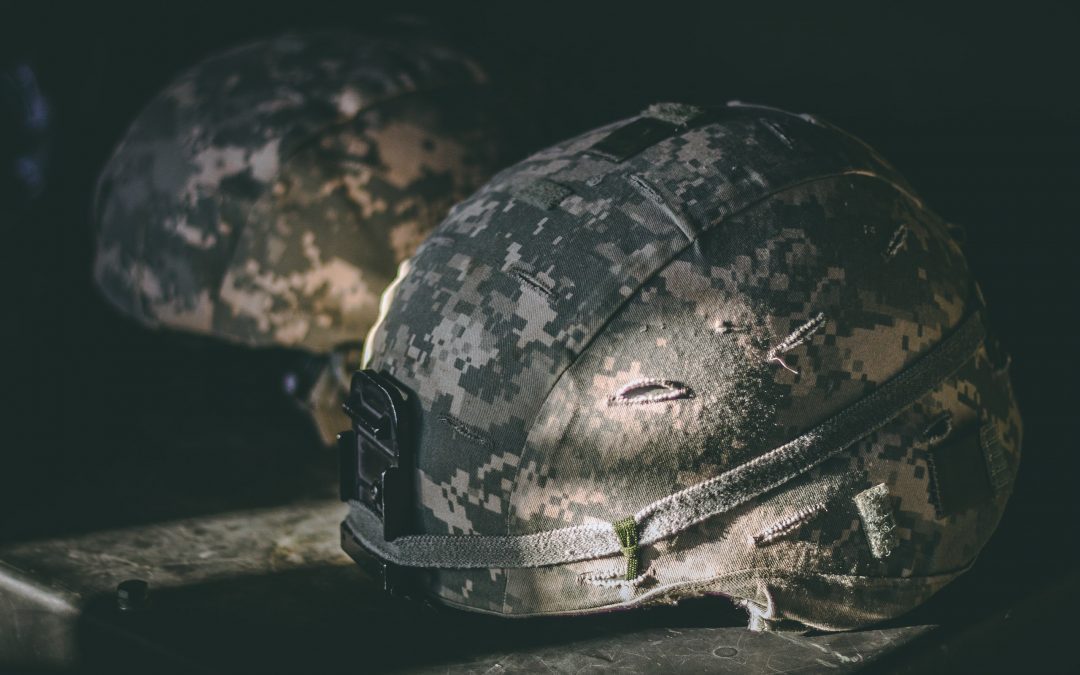
The National Council on Problem Gambling (NCPG) recently announced the launch of ‘Operation Responsible Gambling,’ supported by Entain Foundation US and RG24seven. Operation Responsible Gambling (OpRG) is designed to assist members of the military community in gambling responsibly, and also to ensure they have options to seek help if they show signs of gambling problems.
Keith Whyte, NCPG Executive Director, stated, “We know that active-duty personnel and veterans face higher risks for gambling problems so Operation Responsible Gambling provides access to help, information and veterans’ video testimonials aimed specially at the military community. The information will be available on social media and a micro-website.” The first two videos feature stories from veterans in their own words, talking about their gambling issues during their service and the road to recovery through the Veterans Administration gambling services.
Whyte continued, “The research is clear that members of the military community are at higher risk for gambling problems, yet military community members may not know what to do or where to go. We want to make sure they know there is hope and help available.”
Operation Responsible Gambling is funded by a donation from Entain Foundation US.
RG24seven provided in-kind production and technical support for the videos and overall project.
Go to www.OperationResponsibleGambling.org to view the video testimonials and to find information and help on the risks for gambling problems in the military community.

Jun 2, 2021 | ADVOCACY, PROBLEM GAMBLING, STORIES
I never gambled — or really knew much about it — until a friend suggested we go out and gamble for fun. We were both looking for a way to escape our hurts. I had just gotten divorced from an alcoholic husband and my friend had recently become a widower. I also suffered depression associated with MS, and a gambling outing helped me escape that.
Gambling allowed us to forget about everything. I didn’t have to talk to anyone. I started with maybe $60 per outing but
it escalated. Eventually, I couldn’t stop. I would always need another $100 bill. My friend (who later became my second husband) could sometimes go home making a few hundred dollars, but I never could.
I would gamble for any reason — to celebrate a good day or to help raise my spirits from a bad day. Eventually, after 11 years of gambling, I started thinking I had a gambling problem. I told my husband that I thought I had a problem, but he didn’t believe me. Neither did my in-laws, whose vacations frequently included considerable amounts of gambling.
Once I determined I needed help to keep me from gambling, I explored options. I was hesitant to join a group because I had a poor experience with Al-Anon back when I sought ways to cope with my then- husband’s alcoholism.
I ultimately found a program online that I ordered for $99. I figured I could do the program in the privacy of my own home and figured it had to have value given its cost.
Unfortunately, not being particularly savvy with computers, I needed help setting up the program. I didn’t expect that the person I would call for computer help would be a therapist, but that’s what happened. The person I ended up talking to, Dawn, would become the therapist who would lead me out of the darkness of gambling addiction.
After helping get the program set up, Dawn gently asked some additional questions. Why did I want the program? How serious was I? Had I looked into alternatives? Dawn then said she would check on me in a few weeks to see how I was doing. That started us down the path of telephone counseling, something she was able to get covered by insurance.
I really connected with Dawn, and found myself wanting to follow the program because I didn’t want to disappoint her. She was also the first therapist I had who knew anything about gambling and could explore the connection between gambling and depression.
One thing that I’ve learned about gambling addiction that’s different from other addictions is the randomness of the reward. Someone who drinks or uses drugs knows the impact it will have on them — they will get drunk or high. But gambling is so unpredictable. You could do five spins and win hundreds or lose hundreds. That unpredictability is something gambling addicts love.
I am doing well in my recovery. I lost my second husband to cancer but have not gone back to gambling. I have worked too hard to throw away my freedom from gambling.
COVID, and the related restrictions, has also actually helped me. Even when things reopened, my husband and I were too afraid to go back to the casinos.
As part of my recovery, I told my adult children about my gambling problem. That was a big deal to me. It feels so good to spend the money that I previously spent on gambling on my children and grandchildren instead. I take them out for dinner, get them birthday gifts and spend more time with them. That, not gambling, now means the world to me.