Stress from COVID Restrictions Can Lead to Problem Gambling
COVID-19 has upended our lives, causing disruption to virtually everyone. However, as the pandemic continues, its impact on those with mental health challenges is especially significant.
The requirement to maintain social distancing has led to isolation for many, exacting a toll that’s not easy to measure. However, trends from calls to employee assistance programs underscore the impact of the virus: loneliness is increasing among those who are far from their support systems, counseling for grief is on the rise, anxiety regarding work is growing and there are increased calls about substance abuse.
The uncertainty of life during the pandemic, which has often been accompanied by job changes, financial stress and social isolation, has exacerbated individual health risks. Among other destructive tendencies, those with depression, anxiety or suicidal thoughts may experience an urge to gamble to fill the void. This may be especially true for people in recovery or those with existing symptoms of gambling addiction.
For some, gambling may also be seen as a way to make money given financial pressures they may be experiencing from COVID. But it’s important to remember that in the long run, only the “house” is sure to win. Money used to pay for food, housing, utilities and other necessities of daily living should never be used for gambling.
Given that many casinos and other gambling venues may be operating at reduced capacity — and because many people are choosing to stay at home to reduce their risk of contracting COVID — many gamblers are choosing to gamble online. This can be done anywhere and at any time of day through either a computer or a phone. Online gambling also provides an all-too-easy opportunity to escape one’s problems, which are more prevalent in today’s uncertain times.
Risks of Gambling Online
There are several risks associated with online gambling. First, it is easier for gamblers to hide the extent and frequency of their gambling. In contrast to gambling that’s done at brick-and-mortar venues, there’s no personnel available to check on a gamblers’ well-being or to at least invite them to take breaks. It’s also possible that individuals gambling from home may be under the influence of alcohol or drugs, or struggling with other mental health conditions, either of which can result in bad judgment and betting beyond capabilities.
Sports Betting and Online Gambling: A Potentially Volatile Mix
Although sporting events have been somewhat curtailed during the pandemic, the rapid expansion of sports gambling means there are ever more opportunities to wager on sports. The rate of gambling problems among sports bettors is at least twice as high as among gamblers in general. When sports gambling is conducted online, the rate of problems is even higher, with one study of online sports gamblers indicating that 16% met clinical criteria for gambling disorder while another 13% showed some signs of gambling problems.
Online Gaming
Online gaming consists of any video game that offers online interactions with other players. Its popularity has increased dramatically during the pandemic. Online gaming, similar to sports and online gambling, may become an addiction to some seeking to numb the pain and stress produced by COVID-19.
Tools to Control Online Gambling
Some people who gamble online find it difficult to adhere to a money or time limit. For those seeking to control or even eliminate their online gambling, there are tools and resources that can help. Rather than rely on willpower to silence the urge to gamble, apps can be used to schedule gambling time or automatically prevent people from gambling online, a practice known as self exclusion.
One such app is Gamban, which gives users the ability to exclude themselves from thousands of online gambling sites on up to 15 household devices. Northstar Problem Gambling Alliance (NPGA) offers individual Gamban subscriptions at no cost to any Minnesota resident. Please email sst@northstarpg.org and a link will be provided to set up the account.
Treatment is Available at No Cost in Minnesota
In Minnesota, treatment for gambling disorder is available at no cost. A list of state-approved gambling treatment providers can be found here. Treatment is also available for families (up to 12 hours/year) at no cost.
Expansion of Tele-therapy
To ensure that those seeking help for a gambling addiction can access it given today’s social distancing requirements, counseling is now available from the comfort of one’s home. This type of remote counseling, known as “telehealth,” is provided through phone or online platforms.
Signs of Gambling Addiction
Whether someone is gambling online, with friends and coworkers, or at brick-and-mortar establishments, it’s important to keep the signs of gambling addiction in mind. Gambling problems can be subtle in nature. Knowing these signs can help you identify someone who is at risk for compulsive gambling.
Most importantly, those suffering from gambling disorders, as well as those who have a friend or loved one who can’t escape the urge to gamble, should know that help is available for gambling addiction — and that it works.
For more information about problem gambling in Minnesota, please visit northstarpg.org.
In Their Own Words – Tim’s Story
I had my first big win of $500 as a 7-year old at a church picnic in a small town in Minnesota. I was like a celebrity for a while after that. I chased that feeling for 34 years, becoming very competitive in sports, games, spelling bees and just about everything else.
I figured out I had a gambling problem in 1994 and went to a few meetings but didn’t take anything away from them at that time. That same year I went through outpatient treatment to help control my gambling. But I did not want to stop; I wanted to get back to the winning streaks I thought I had.
Over the next two years I had periods where I abstained from gambling to prove to myself and others that I had it under control. But I didn’t. In 1997, I stole $250 from my employer to cover gambling losses. By the middle of 1998, I was taking much larger sums, with the last theft being for $25,000. With each theft, I convinced myself it would be the last time I’d do it.
Every time our company had an audit, I would pray and pray that they wouldn’t pick one of the stolen checks I had cashed. I felt really bad about what I did, and the pressure to hide my gambling problem increased. I even worked on plans to have someone kill me, put me in the trunk of a car and abandon the car. I thought it would be better for my parents and others to see me murdered than to learn about my gambling problem and the illegal activities I had committed.
I white knuckled it and floundered around for a while, staying gambling free but still trying to “find recovery” on my own.
I was eventually caught, and was fired from my job on December 6, 1998 – yet that was not my bottom. I worked out a repayment agreement with my employer, but I reneged on it when I couldn’t make the payments because of my continued gambling. In February of 2000, I was charged with 24 federal felony counts of theft by swindle for the money I stole from my employer, a securities firm and a banking institution. I plead guilty to much lesser charges, served my time and am still making restitution payments.
My last day of gambling was two days before I entered inpatient treatment on September 20, 2000. I white knuckled it and floundered around for a while, staying gambling-free but still trying to “find recovery” on my own. I believed that I was not worthy of God’s or any other higher power’s help or caring.
On November 7, 2001, I was involved in serious accident that changed my outlook on recovery and life in just a few seconds. My SUV was demolished after rolling over three and a half times. I was pulled from the wreckage by a good Samaritan. I walked away from the accident with very minor injuries because I heard from within the car that I needed to lay down. There was no one else in the car with me, but I listened to that voice and laid down on the front seat, seat belt still intact. The roof of the car was crushed down to the steering wheel. Had I not laid down, I would have most likely been killed or paralyzed.
I knew then that I did have faith in God. If I didn’t or had hesitated about lying down, I may not have survived. I began to live a different life the next day, one where I am involved in GA, the conference and the fellowship that GA has to offer. I am alive today because of the choices I have made in recovery. Some choices have been made without hesitation while other choices have taken longer – like asking for help during sad times.
I have a few friends from before recovery who tried to help, but I wasn’t ready to accept help. They still stood by me in courtrooms and then a treatment center, having accepted my addiction without necessarily understanding its affect on me. The hundreds of friends I have met through recovery do understand the effects my addiction has on me. I have been willing to accept their help and they in turn are willing to help me.
What a different life I am experiencing thanks to my higher power, my friends and my choices.
The Problem Gambling Landscape in Wisconsin
Northern Light sat down (virtually) with Rose Blozinski, executive director at the Wisconsin Council on Problem Gambling, to gain some insights about the problem gambling landscape of our eastern neighbor.
Here are some highlights of that conversation.
Q: How is the Wisconsin Council on Problem Gambling funded?
A: We have a grant from Wisconsin’s Department of Social Services for a public awareness campaign and also receive funding from casinos and private donations. Our budget is approximately $475,000.
Q: How does Wisconsin train gambling counselors?
A: We have two types of training. The first is a 60-hour phased program that consists of four phases of 15 hours each. We also have an intro training that’s six hours long. The goal is to provide people with more awareness of gambling disorder and to get them interested in continuing the four-phase program. The training is provided by three certified gambling counselors.
Q: Does Wisconsin have licensure for problem gambling counselors?
A: We do not have a state certification, though we encourage people to get the national or international certification. We have approximately 80 counselors who have gone through the four-phase program and who are listed as referral sources on our helpline. We also have an additional approximately 20 counselors who are nationally/internationally certified. And several more are in process.
Q: Is video gaming addiction incorporated in the state’s training?
A: We have started doing that. One of our trainers has done some research in that area. We are adding that into our programming for teenagers in school.
Q: Within Wisconsin masters counseling programs, how much time is dedicated to teaching about problem gambling specifically vs. addictions in general?
A: This is purely a guess, but I think that any problem gambling education that takes place is through addictions training.
Q: What types of professionals attend training — social workers, addiction counselors, psychologists, etc?
A: We don’t seem to have as many addiction counselors attending as we used to. We see a lot of social workers and other kinds of counselors who take the training as part of their masters programs.
Q: Does the Wisconsin council have any kind of relationship with schools?
A: We have a relationship with several schools and a few technical colleges to provide an alternative class. While one technical college has put that class on their schedule for three years, nobody has taken it because of other classes they are required to take. We are trying to get a jumpstart on that. We do a program with high school classes as requested.
Q: What’s the likelihood of sports betting becoming legal in Wisconsin?
A: At the present time it is not legal, though some people are trying to work on that. I don’t think it’s going to go anywhere too quickly. However, I think if surrounding states legalize sports betting, Wisconsin will look at it more seriously.
Q: How has the pandemic impacted your services?
A: We at the council are working remotely, so the helpline, which we operate, has continued. We’ve seen less calls than we expected as we thought people would be panicking because casinos were closed. Regarding treatment, one counselor told us they weren’t seeing a lot with gambling but were seeing people with other addictions. And a lot of this counseling is taking place by phone, which is different.
Q: Is Wisconsin allowing telecounseling during the pandemic?
A: It seems so. A lot of counselors are doing it, but I’m not sure if they are part of private or state agencies.
Q: Does Wisconsin provide money for treatment?
A: No. In Wisconsin, there are zero dollars set aside for treatment. As you might imagine, this is very difficult because gamblers seeking help usually have no money. We encourage them to go to GA, but there aren’t many GA groups in rural areas so, unfortunately, the cycle tends to continue.
Q: How many casinos are there in Wisconsin?
A: We have 26, with one in Hudson being the closest to Minnesota. All casinos are owned and operated by 11 tribes, but several tribes have several casinos each.
Q: Does Wisconsin have self-exclusion programs for gamblers?
A: The casinos do, but each one is different in how they administer the program.
Q: What are the challenges you see in Wisconsin?
A: The biggest issue is getting people the help they need. We can refer them all over but if the financial resources aren’t there it doesn’t do that much good. Affordable treatment is one of the biggest issues. Another issue from our perspective is the challenge to get a public awareness effort going all over the state. It’s a battle to reach people in an efficient way.
Q: What are some exciting things as you look ahead?
A: In the short term, we’re hoping that our state conference that’s been rescheduled to August will happen. Beyond that, we have more webinars and more trainings online. We’ve also talked to technical colleges that could do an intro course online. And, of course, we continue to find ways to reach out to people with gambling problems.
COVID-19 Spurs Increase in Telehealth Counseling
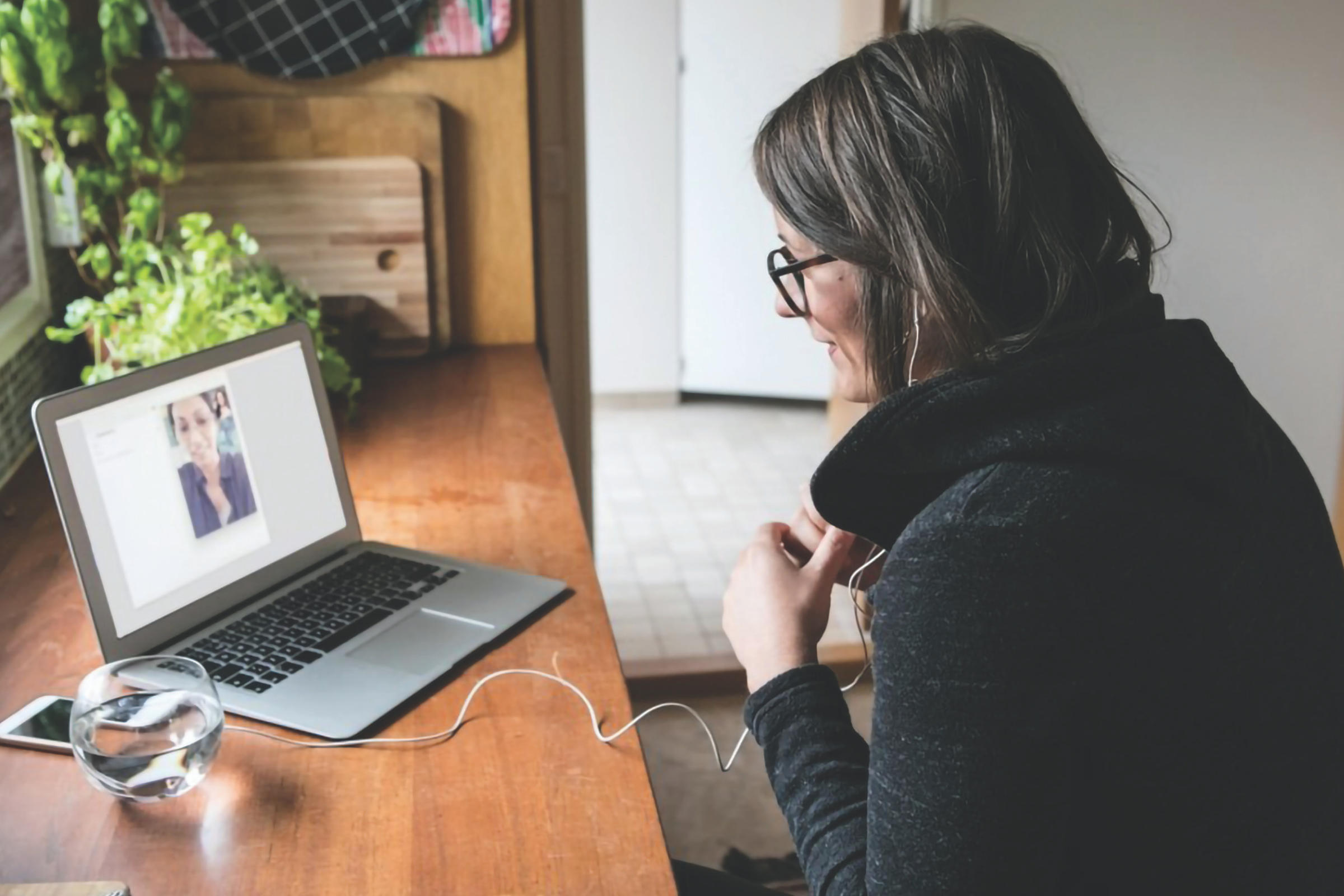
The COVID-19 pandemic has affected virtually all aspects of life. Gambling counseling is no exception.
Given the drastic reduction in social contact, we asked several gambling counselors about the state of gambling therapy and the changes they’ve observed.
Lisa Vig, Gamblers Choice
More of our clients are keeping appointments than we anticipated. It tells me that staying connected to recovery support is very important at this time. They have also been initiating and requesting additional individual support as well.
We use a variety of platforms, including Teams, Zoom and the phone. One accommodation we’ve had to make using these platforms is reducing the size of groups. It’s more difficult to manage attention spans, allowances for everyone to talk and receive the attention they need with eight or nine in one group. We’ve adapted by offering shorter groups, more often, with fewer attendees.
As a counselor, I find that takes a different level of energy to conduct telehealth counseling. When you’re not in the same room sharing the same space, you have to pay more attention to their voice, inflections, participation and engagement since the ability to watch body language or other expressions is compromised. The clients we have worked with have expressed gratitude at every opportunity to stay connected.
I think telehealth counseling has a very valuable place, especially in this part of the country where we are dealing with rural living and limited availability of counselors. At least 50 percent of our clients would benefit from the option of telecounseling. Being able to utilize a combination of in person and telecounseling to customize delivery of treatment services would be ideal.
Craig Johnson, Club Recovery
Once all of my clients became used to the change and requirements of the stay-at-home orders, my group attendance has been good. Most clients are participating and “showing” up for group.
Except for rare occasions, we are completely virtual. We use phone or a Telehealth platform to conduct interactions with all clients at every level of service we provide.
While counseling is not a “one size fits all” process, I think that at some level and some circumstances all clients can benefit from using a Telehealth platform. We need to adapt and move forward with as many innovations in reaching out to clients that we can. Since the beginning of the COVID-19 crisis, the treatment community has been advocating vigorously for the use of Telehealth platforms and CMS and DHS recently approved that all services we provide can be done with Telehealth. Telehealth is a capability that we must keep as an option to use when a client may not be able to access services via traditional means.
There is a great need for gambling disorder providers outside of the Twin Cities, Duluth and near Fargo. Without Telehealth, potential clients in those areas would not be able to get services. As a community of providers we must promote this capability wherever and whenever possible to reach all those who need help. This will be the main topic of discussion at the next meeting of the DHS Advisory Committee on Gambling Disorder on May 14.
Paul Mladnick, Solo Practice/Bridges & Pathways
I don’t think Telehealth counseling is ideal but I don’t think that much is lost. About half of my clients prefer to cancel appointments until we have the all clear. I’d say about 30 percent are coming to my office while about 20 percent are receiving counseling over the phone.
From a practical perspective, I am keeping my office sanitized prior to each session and I do practice social distancing in my office. I have noticed that the number of referrals is down since March 17, so I have considerable availability for those with a gambling problem or those concerned for family and friends.
Online Gambling Increases During Virus Crisis
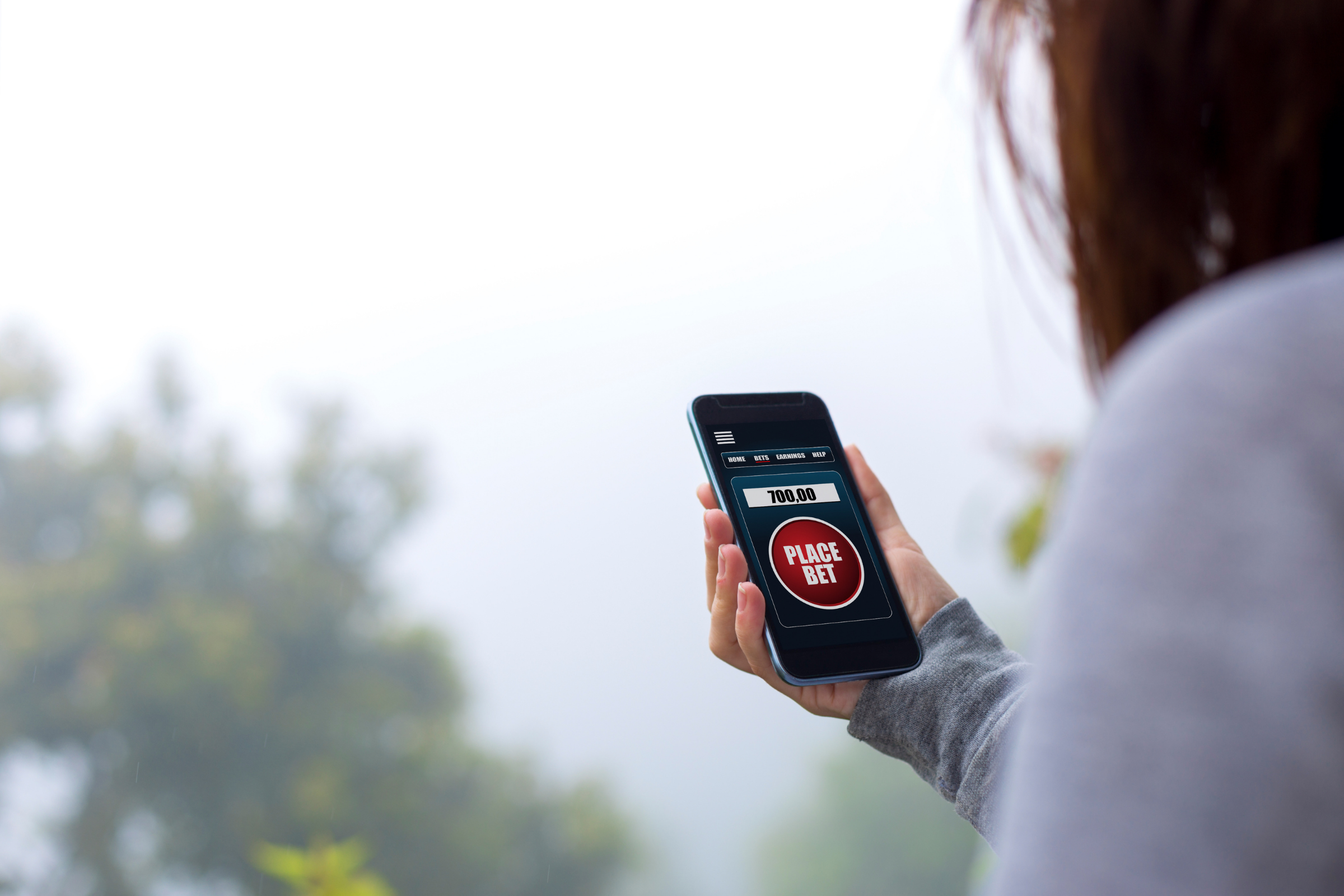
As of April 9, less than four weeks after most casinos suspended operations amid COVID-19 concerns, online gambling appears to be on the rise both in the U.S. and around the world. According to Global Poker, an online social poker room, use of online poker sites increased by 43 percent in the U.S. since social distancing and lockdowns took effect. Notably, there was a 255 percent increase in first-time poker players, suggesting that gamblers unable to participate in their preferred ways, such as sports betting and those who frequent casinos, may be switching over.
A similar trend has been noted in Australia, where a study showed there was a 67 percent increase in online gambling the week following the shutdown of all non-essential services due to COVID-19. In fact, the Australian study revealed that the online gambling industry was a major benefactor of the shutdown, along with food delivery and online retail and subscription services.
It is currently illegal to bet online in Minnesota. Those who bet online are using offshore, unregulated venues.
If you or someone you know has moved to online gambling and would benefit from using a self-exclusion tool, NPGA is offering a free one-year subscription to Gamban, an app that will block tens of thousands of world gambling sites on all devices. If interested, please email sst [at] northstarpg.org.