Jun 18, 2025 | PROBLEM GAMBLING, RECOVERY, STORIES
I was seven the first time I gambled. We were visiting my grandmother, and the older ladies in her building taught me how to play rummy—for nickels. We played for six hours, and by the end of the night, I’d taken all their money. I remember asking my parents the next day when I could gamble with them again.
There was a lot happening at home around that time. My sister’s teenage pregnancy caused constant tension and uncertainty. Playing cards with my grandmother gave me a break from the chaos.
When I turned 18, I went to the local casino with friends and my dad. I blew through my paycheck in minutes. My dad handed me $50 for my birthday so I could keep playing. I ended up winning some money back. That was cool.
Later, after dropping out of college because I felt homesick and unsure of what I wanted, I became a blackjack dealer. I discovered a benefit for employees—you could cash your paycheck for free at the casino. On payday, I’d often stick around until I either lost everything or doubled my money.
Poker was growing in popularity then, and I got good at it. I played tournaments around the Midwest and would often stay and play more poker or blackjack afterward.
Not long after, I began experiencing serious depression. Doctors gave me different diagnoses, and I was eventually labeled bipolar. I went through intensive rehab for depression.
I got married and moved to Minneapolis, but we didn’t stay long. We returned to rural life, and I got another job at a casino. About a year into the marriage, my husband relapsed after drug treatment. I flushed his drugs down the toilet, and he tried to choke me. A coworker helped me pack up and leave.
I kept working at the casino, but my mental health didn’t improve. Looking back, I can see how gambling highs lifted me way up, and losses sank me just as hard. I attempted suicide multiple times.
After years in and out of treatment, I finally stopped going to casinos. I met my current husband and went several years without the compulsion to gamble. I could even go to a casino with friends or my husband and be responsible.
A year into our marriage, I had my first daughter. I struggled with postpartum depression and soon realized that being a stay-at-home mom wasn’t for me—I needed more social interaction. I started going to the casino in the evenings, just to get out of the house.
Eventually, I took a job as a program coordinator for a home health company. I was working 60 to 70 hours a week, often leaving before my daughter woke up and coming home after she was asleep.
A year later, I got pregnant again. My son was born with a heart condition and passed away a week after birth. That sent me into a tailspin. I didn’t want to go back to work. I went on extended medical leave and returned to therapy.
After my sessions, I’d often go to the casino. That’s when my husband first voiced concern. He asked me to talk to my therapist about it—but I didn’t.
I got another job and became pregnant again. Despite everything, I still found reasons to go to the casino. I opened a separate bank account so my husband couldn’t see how much I was spending—or losing. He started to worry about our finances.
About three years ago, I lied to my husband so I could spend the day gambling. I stayed at the casino for 14 hours, lost everything in our accounts and maxed out all of our credit cards, including the ones he didn’t know about. That night, I realized this was more than depression. I remembered hearing the term “compulsive gambling” when I worked at casinos but had never imagined it applied to me. I even called the 800 number posted on the casino door—but hung up when someone finally answered.
A few weeks later, my husband found a W-2G form showing gambling winnings I hadn’t told him about. He started asking more questions about our finances. I still didn’t tell him I had drained our 401(k) or spent $29,000 worth of insurance checks we got for roof repairs as gambling money. I thought I could double it. I didn’t.
I kept losing. Then one night, before heading out, I wrote my husband a letter telling him everything. I left it on the counter with our credit cards and checking info. I told him I’d understand if he didn’t want to try anymore.
He read the letter after putting our kids to bed. He called me and told me to come home so we could talk. It was the longest night of my life. I felt like the worst person in the world.
That Sunday, I went to my first GA meeting. We researched treatment options and found the Vanguard Center for Gambling Recovery 30 miles away. I called them the next day and signed up.
I completed a 30-day inpatient program. It was the hardest and best thing I’ve ever done—especially being away from my kids with only limited contact.
Since then, I haven’t gambled. I attend two to three GA meetings a week and stay connected with others in recovery. I even went to the first international GA conference since COVID. I’ve found peace among people who understand what I’ve been through.
Now, life is boring—and that’s a good thing. Boring means peace, stability, and being present for my family.
Jun 18, 2025 | ABOUT MNAPG
Emerging adults—those in the 18-29 age group—are at particular risk for developing an addiction to gambling for various reasons. Historically, this population has been challenging to reach for those wanting to communicate prevention and awareness messages.
Recognizing the importance of educating young adults, MNAPG is intensifying its outreach by developing a new webpage tailored to this audience. We are also focusing on three key groups:
- athletes and athletic directors
- campus counselors and student health center staff
- Emerging adults—18-29-year olds
Look for updates on our progress in future issues of Northern Light.
Jun 18, 2025 | PROBLEM GAMBLING, SPORTS BETTING
The NCAA is considering a significant revision to its sports betting policy that would permit student-athletes, coaches and staff to wager on professional sports, while maintaining the existing ban on betting related to collegiate athletics. This potential policy shift, currently under discussion by the Division I Council, follows a 21–1 vote by the Division I Board of Directors in favor of deregulating the prohibition on professional sports wagering. If approved, the changes could be implemented as early as June 2025.
With legalized sports betting now available in 40 states, the NCAA’s current blanket ban has become increasingly challenging to enforce, often leading to disciplinary actions for minor infractions involving low-stakes bets. By allowing betting on professional sports, the NCAA aims to reallocate its enforcement resources to focus on more serious threats to the integrity of college sports, such as point-shaving and game-fixing.
The NCAA is also exploring the implementation of harm-reduction strategies, including safe harbor provisions and reduced penalties for individuals who seek help for problem gambling. This approach reflects a broader shift in the NCAA’s stance on sports betting, emphasizing education and support over punitive measures.
Lastly, the NCAA and Genius Sports have expanded their partnership, with Genius Sports becoming the exclusive provider of official NCAA game data to licensed sportsbooks for all post-season tournaments, including March Madness, through 2032.
This potential policy change aligns with the NCAA’s recent initiatives to modernize its approach to sports betting, as evidenced by its expanded partnership with Genius Sports to distribute official game data to licensed sportsbooks.
MNAPG’s Take
While MNAPG is officially gambling-neutral, we have concerns that the NCAA is capitulating to the pressures of ever-growing sports gambling. While we applaud the NCAA’s exploration of harm-reduction strategies, we fear the long-term implications of these developments will be serious for college students and athletes.
Some of the real-time data provided by Genius Sports to sportsbook is used to generate and continuously update odds for various in-play prop bets, such as “next goal scorer” or “next touchdown.” Given the high risks involved with prop bets, we think the ready and uniform availability of official data will only feed this concern.
Jun 18, 2025 | RECOVERY, RESOURCES
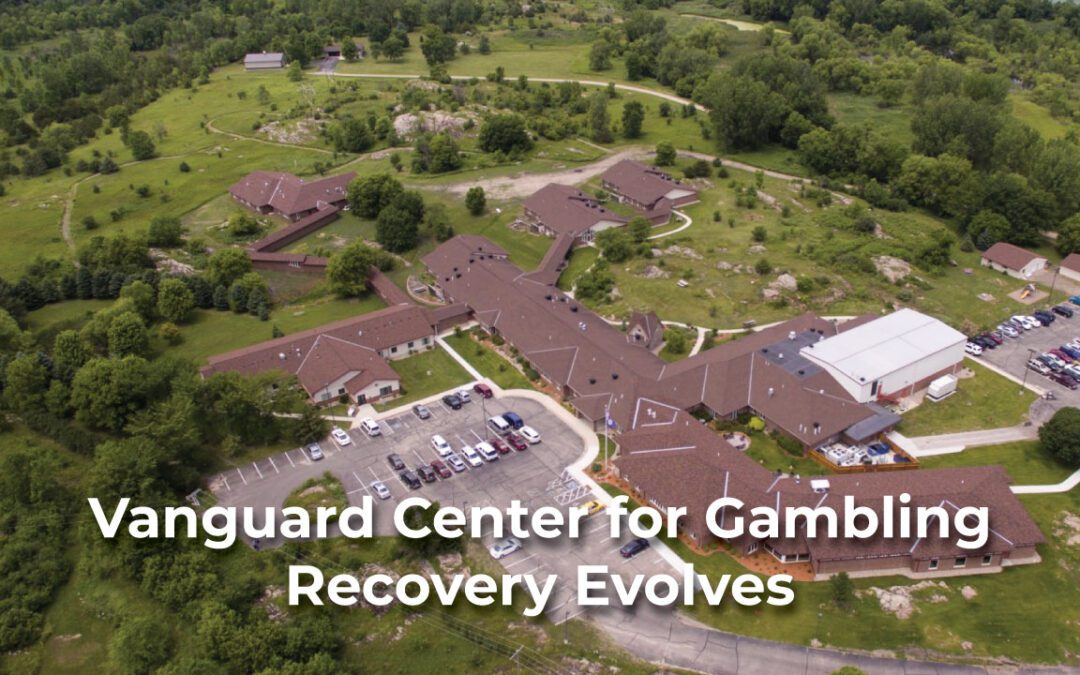
After more than 30 years, the Vanguard Center for Gambling Recovery in Granite Falls,
Minnesota’s only residential program for problem gambling and one of only a handful of such programs in the nation, continues to grow and involve. Northern Light sat down with Steph Almanza, unit coordinator for Vanguard Center for Gambling Recovery, to learn more about how the program is evolving to help gamblers and their affected others.
NL: What is the approach you employ when treating problem gamblers?
SA: At Project Turnabout, a holistic approach to gambling recovery is at the core of our programming. Gary Van Eps leads individuals through a foundational 12-step group that explores each step in depth. This group setting encourages participants to examine their experiences with powerlessness related to gambling, while also addressing ego, character flaws and the role of spirituality in their recovery journey. Spiritual support is further provided through dedicated sessions on grief, loss and spirituality by Chaplain Robert Skjegstad. Additionally, recreational therapy is offered daily as a structured part of the healing process, helping clients rediscover joy and build healthy coping strategies.
Our program is rooted in cognitive behavioral therapy (CBT), which has a strong evidence base for addressing both substance and behavioral addictions, including gambling. A core component of CBT involves identifying and restructuring cognitive distortions and negative automatic thoughts, unhelpful patterns of thinking that often reinforce gambling behavior, minimize consequences and drive emotional distress. Through this approach, clients gain the insight and tools needed to respond differently to emotional triggers, rather than reverting to gambling as a coping mechanism.
NL: What role does shame play in diagnosis and treatment?
SA: We spend a lot of time exploring shame, as it can be a significant barrier to healing. Many clients experience shame not just for their actions, but as a reflection of who they believe they are. Without addressing shame, it can become a hidden driver of relapse. By teaching the difference between guilt and shame, and encouraging clients to develop self-compassion, we support a more sustainable and forgiving path toward change.
As part of this process, clients also learn when and how to apply coping skills, shifting from reactive patterns to more intentional behaviors. We help them build emotional regulation skills that are applicable both inside and outside of treatment.
NL: What else do you focus on?
SA: We also focus heavily on communication and boundaries. These skills are essential for long-term recovery and for repairing the relational harm that often accompanies gambling addiction. Clients explore past patterns of people-pleasing, avoidance, dishonesty or conflict, and learn to set healthy boundaries with themselves and others. These relational tools not only support accountability but also reduce the likelihood of returning to toxic dynamics that may trigger relapse.
NL: How do you incorporate family into the treatment process?
SA: We provide dedicated family sessions, as gambling rarely impacts the individual alone. Loved ones are often affected by broken trust, financial loss and emotional trauma. Family work helps reestablish communication, set healthy expectations and create a supportive post-treatment environment—one where both the individual and their support system can continue to heal together.
NL: What else is on the horizon for Vanguard?
SA: Recognizing the lack of resources in rural areas, Project Turnabout has established Growth Group, a monthly alumni meeting held on the third Saturday of each month. This group invites former clients—who are at least six months post-treatment—to return, share progress, discuss challenges and offer peer support to current participants. This continuity fosters a strong sense of community and ongoing accountability.
NL: What kind of practical emphasis is provided to clients?
SA: In addition to emotional and spiritual care, the program places a strong emphasis on mental health and practical life skills. Clients receive weekly one-on-one therapy sessions and can consult with a psychiatrist for medication management, if needed. Financial education is also a vital part of the curriculum, covering budgeting, debt management and connection to relevant community resources.
The program also integrates practical tools to aid in relapse prevention. One such tool is Gamban, an online self-exclusion service for individuals seeking to block access to gambling websites. For those looking to exclude themselves from physical gambling establishments, staff provide hands-on support to navigate this often-complex process. This includes assistance with completing self-exclusion forms, gathering required identification, securing notarization and submitting documents by mail. Clients are also guided through the additional step of contacting casinos to stop promotional mailers, emails and other marketing communications—all common relapse triggers.
Together, these services create a comprehensive, compassionate framework to support lasting recovery from gambling addiction.
Vanguard Center for Gambling Recovery is a residential program solely for those suffering from problem gambling. The Center provides men and women aged 18 and older with the tools necessary to begin their process to recovery from gambling and discover some of the obstacles in their lives that may challenge long-term recovery. For more information, visit https://www.projectturnabout.org/treatment/gambling-recovery/vanguard.
Jun 17, 2025 | ABOUT MNAPG, ADVOCACY
Given their close interaction with patrons, casino employees are in a unique position to spot those exhibiting signs of problem gambling. It follows logically that the better educated casino staff are in identifying those showing signs of harm from gambling, the more assistance they can offer.
Recognizing the importance of having staff trained to spot potentially problematic gambling behavior, the Minnesota Alliance on Problem Gambling (MNAPG) has partnered with SG Global to develop an employee training program. The training is expected to be implemented for casino employees at Canterbury Park and Running Aces initially, with the hope that additional casinos will participate in the future.
The training consists of three 20-minute modules designed to help casino staff identify and respond to signs of gambling-related harm. The program provides a practical framework for recognizing how gambling behaviors can escalate over time.
Drawing from lived experience, the training encourages earlier recognition and response rather than waiting for more extreme behavior to surface. “We show how an individual’s relationship with gambling can change over time, exploring the role of gambling, the emotions attached to their gambling and their current decision making,” says Ben Davies, managing director at SG Global. “Showing how harm can build over time and how an individual’s relationship with gambling can change helps staff better understand when and how to intervene, with an aim to preventing harm.”
The effort represents SG Global’s first training project in the United States. As a result, SG Global and MNAPG have worked closely to adapt the material for an American audience, modifying both the language and the examples to reflect cultural differences.
In the UK, where SG Global originated, conversations about gambling habits are more normalized. “It’s not uncommon in the UK for a cashier to ask a patron, ‘I noticed you’ve gambled more than you usually do, are you sure you want to place this bet?’” says Ben. In the U.S., such direct interactions are less comfortable, and the training aims to help bridge that gap in a respectful and effective way.
Once the training is rolled out, SG Global plans to re-evaluate progress after 3–6 months, making adjustments as needed. Additional modules focused on specific themes may be developed, and there is also interest in extending the program to tribal casinos with customized content, lived experience and imagery.
“We are keen to work with as many people as possible to help increase awareness of gambling harm so that gambling operators can support their customers to play safe in a sustainable and enjoyable manner.” says Ben. “This training is a step toward creating more awareness and promoting more open conversations with those at risk of gambling harm.”