Feb 8, 2023 | PROBLEM GAMBLING, RECOVERY
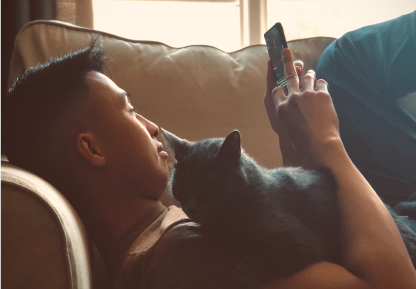
When you find yourself up at 2 a.m. betting on Chinese league basketball games, something you know nothing about, you have to realize that maybe you’ve got a gambling problem.
My relationship with gambling started when I was young. I remember playing cards with my uncle when I was nine or ten years old. At that time, poker was all over television, with ESPN broadcasting various poker tours. I found a website where I could play online for practice, and I spent many hours doing that.
By the time I was 14, I was staying up until four or five in the morning playing poker with my parent’s credit cards. My gambling progressed, and when I moved out on my own, I thought that maybe I could gamble all the time.
But by the time I was 18, I ended up in Gamblers Anonymous (GA). It was at a church and there were only two people there. At the time, it didn’t feel like the place for me. I had a full college scholarship for chess and figured I’d grow out of gambling. Unfortunately, I only lasted three months in college, and when I lost my scholarship, I lost some of my identity. I continued to gamble and also found substances as a way to try to keep gambling away.
There was a lot of pain and suffering between age 19 and 25. Although I visited GA again in 2013, I was very stubborn and didn’t stick with it. I got sober when I was 25 but didn’t give up gambling. By that time my income was substantially higher and my bets were larger. I also got involved in illegal activities to sustain my gambling.
In 2021, I had a substantial win and thought that would change everything. But, of course, it didn’t. I found myself sick and tired of being sick and tired. This time, my involvement with GA feels different. I’m more committed, have sponsors, chair meetings and go every week. While treatment centers may work for some (I went to the Vanguard Center for Gambling Recovery in Granite Falls as well as to a gambling treatment center in Florida), I’ve found that GA works best for me.
It’s now been eight months since I gambled. I’m very happy now. I have a great job and great friends. I’m back together with my girlfriend, who has been through a lot with me.
As someone who got into heroin at one point, I can honestly say that the high from gambling was greater than that of heroin. It is the hardest of the addictions. It’s easier to lie
to think you can win something. With drugs and alcohol, you won’t win anything, but with gambling, you can trick yourself.
To those who are struggling with gambling and wondering what to do, I would say this. Nobody accidentally finds their way into a GA meeting. If you think you’re having an issue, you more than likely do. But there’s help out there. There are a lot of different meetings and a lot of people are willing to help you. The environment is very welcoming and nonjudgmental. I realize now that the age factor — my being younger than many in GA — was simply a copout.
But I do think there’s a need for more GA meetings focused on young people, particularly now there are likely more younger people gambling because of the easy access. It can be difficult when you look around and see that most of the other meeting attendees are older. For this reason, I’ve worked to create a “young persons” GA meeting. My hope is that it will help others like myself.
Feb 8, 2023 | PROBLEM GAMBLING
There has been increasing national attention on the recent push to legalize sports betting. (Minnesota has yet to pass a bill but look for action this legislative session.) However, another potentially lucrative expansion may be iGaming, defined as all forms of gambling games available through online apps. We were introduced to online gaming unknowingly through social casinos and “free-to-play” games on our phones. In a relatively short period of time (the iPhone came to market in 2007), gaming designers and gambling operators have exploited the tremendous opportunities to gain new customers and revenue through these relatively new venues.
At the Fall 2022 gathering of the Global Gaming Expo (G2E) in Las Vegas, a panel of gaming industry leaders discussed the opportunities afforded by legalizing iGaming. Currently, only six states allow iGaming: Pennsylvania, Michigan, Connecticut, New Jersey, West Virginia and Delaware. Leaders throughout the industry have asserted that the U.S. could gain $30 billion in annual revenue if iGaming were legalized in 42 states with commercial and/or tribal casinos and mobile sports betting. Some leaders expressed that iGaming would be quite competitive with commercial brick and mortar gambling. So, why aren’t more states jumping on this potential windfall?
Four reasons were cited by the panel.
1. Most states experienced a budget windfall due to COVID federal payments, reducing the need for additional revenue.
2. Lawmakers are concerned that adding iGaming will lower land-based revenue and cost jobs.
3. The risk that iGaming could lead to more gambling addiction.
4. iGaming doesn’t appear to have the same consumer interest as sports betting.
In addition to these four reasons, the panelists discussed the need for non-industry leaders to champion the cause. The tsunami-like approval by 35 states to legalize sports betting after the U.S. Supreme Court’s decision to overturn the ban in May 2018 was attributable in part to the number of consumers who were in favor of its passage. Currently, there doesn’t appear to be an equivalent level of enthusiasm for iGaming. In hindsight, the industry is thinking it may have moved too quickly to get sports betting through, when it should have paired the two in legislation, taking advantage of the pent-up demand for sports betting. Nor did it anticipate the level of federal COVID money going to the states, which has created at least a pause in lawmakers’ thinking about the benefits of expanding gambling again. Some lawmakers are considering that the expansion of slot machines and table games on a phone 24/7 may contribute to more gambling problems than sports betting.
(While it’s still early in the cycle and not a lot of data has been collected to measure the impacts of sports betting and iGaming, there are real concerns being raised about the level of advertising for sports betting and its influence over consumers, whether adequate consumer protections are in place in states that have passed sports betting and/or iGaming, and what states’ responses will be if addiction rates rise while minimal funds were set aside to address the issues.)
MNAPG will be watching this carefully and will continue to keep you informed of changes in the field.
Feb 8, 2023 | ABOUT MNAPG
The Minnesota Conference on Problem Gambling, produced by MNAPG, took place in mid-November. The theme was Connecting. Reflecting. Moving Forward. Assessing the state of problem gambling. Our conference featured counselors, researchers, an economist and individuals with lived experience.
In this issue of Northern Light, we’re highlighting two of our most powerful presentations, both from those with lived experience. Stories of recovery are always among the most popular sessions at our conference. While each of these stories is unique in terms of games of choice, length of addiction and recovery motivation, they also share common elements, such as greater self-awareness and a much-needed sense of peace.
Women’s Panel Discussion
The women’s panel discussion included four women of various ages and backgrounds detailing their experiences: three were gamblers in recovery and one was an affected family member. Each of the panelists were mothers and were motivated in their recovery to do better not just for themselves but for their children as well.
Among the perspectives shared was the need for there to be safe spaces for woman in recovery, particularly for women of color. Many incorrect assumptions are made about women gamblers and clinicians don’t typically pursue gambling behaviors with their female clients, not realizing that it can be a part of their addiction or mental health story.
Other takeaways from the presentation include:
o Women’s betting isn’t any different than men, though other aspects of their stories are different.
o It’s important to have women-only safe spaces for those whoe have experienced sexual traumas.
o Recovery is not one-size-fits-all, and finding spaces to meet their particular needs was vital to their recovery.
o In some instances, there was generational trauma/addiction, necessitating the need to have frank conversations to break the chain.
Several times throughout the presentation, the women expressed the desire for clinicians and researchers to pay more attention to women, to ask questions about gambling, and to dig deeper into the behavior. They felt that women have been long ignored and that diagnosing the gambling addiction didn’t come to light until each were far along in the addiction.
It takes tremendous courage to relate one’s story to an audience. MNAPG is so grateful to each of these women for agreeing to participate and sharing some of their insights and experiences.
Financial Risk Discussion
Chris Farrell of Minnesota Public Radio and Dan Trolaro of Epic Risk Management spoke about financial literacy and financial freedom and its relationship to gambling. Chris, who has a background in finance and investments, emphasized the importance of weighing risks. Dan, formerly a finance and investment trader, is a person in recovery who used gambling as a salve after experiencing first-hand trauma and tragedy from the World Trade Center attack. His gambling led him to embezzle millions and he ultimately served time for his crimes. Together, Chris and Dan offered a great dialogue about investing today, understanding the differences between risk – appropriate vs. inappropriate, and reframing the understanding of financial literacy.
The speakers emphasized that investing is not a bad thing, but stressed that if one is to do it, they need to understand the vehicles in which they are investing. Additionally, before any investing takes place, it’s important to have conversations with yourself and family as to what you want your money to do for you. Is it for retirement, college, family vacations or long-term health needs? It’s important to set goals and hold yourself accountable to those goals.
Chris talked about peer groups that come together with similar investing goals and values, holding each other accountable and supporting one another as they try to obtain those goals. There’s nothing wrong with putting some money into the market as long as you fully understand what you are putting at risk. Financial literacy is meant to inform you about the risks and to develop good habits; it’s not a tool to determine what to invest in. Establishing goals and holding particular values about money is key.
Financial literacy is about freedom, opportunity and risk, and creating a life that incorporates these three elements. We want people to make appropriate decisions by asking, “What does financial freedom look like to you?” “What do you want your money story to be?” “What are the appropriate risks to get you there?”
The question was raised as to whether people who are early in their recovery should invest at all. Dan said it was important in his early recovery not to invest. He feels a sustainable and meaningful long-term recovery must be a total transformation. Recovery is the path that leads to a whole new life where there isn’t room for gambling. It’s a wholesale change to the way one lives one’s life.
Feb 8, 2023 | PROBLEM GAMBLING
Gambler Healing, an online gambling addiction recovery program offered through the state of North Dakota, is now available free for anyone — clients and counselors — to use.
While the program was unveiled just prior to the pandemic, it offers particular advantages in a post-pandemic world in which telehealth counseling figures to be a prominent and permanent feature.
“As we move into telehealth counseling becoming the normal, the Gambler Healing course can be a really beneficial resource for counselors who aren’t familiar with problem gambling and provide structure for individuals who live a distance from counselors,” says Lisa Vig, LAC, ICGC, program director for Gambler Healing.
Historically, there are many reasons why those with gambling addiction don’t always get the help they need. Some of these challenges include access to counselors, dealing with the burden of stigma and shame, concerns about privacy, and uncertainty about whether a problem really exists. With this online treatment program, it’s possible for more people to overcome these obstacles and access treatment.
Gambler Healing is an online course based on a 12-step recovery process that addresses the needs of gamblers with addiction. Details about the comprehensive program can be found on GamblerHealing.com. The program is the only one of its kind according to Lisa, who helped develop the curriculum. “The idea came to us when it became apparent that there were not a lot of relevant and educational resources about gambling addiction available,” says Lisa. “The original thought was to simply create updated educational DVDs, but the advent of e-campus modules made it possible and practical to create an actual class that would have greater impact.”
Program Components The program includes a variety of components considered critical for success. One key feature includes videos of recovering gamblers discussing their experiences. “We want people to know that they’re not alone and that others feel the same things that they might be feeling,” says Lisa. The program also includes a section for journaling. “Journaling is something we encourage in our own treatment program,” says Lisa. “It provides an opportunity for self-reflection and a chance to inventory one’s own behavior and thought processes.”
Enrollees also have the chance to read testimonials from those who have benefited from treatment. This helps to instill hope and remind participants that others have overcome similar challenges. There’s also an educational aspect of the curriculum to help gamblers understand how the process of addiction works.
Advantages of An Online Program As a program that’s administered online in the privacy of peoples’ homes, there are several advantages to Gambler Healing. Perhaps most important is the access to treatment it provides to those living in rural areas. “It can be particularly helpful for people living in places where there may be limited counselors or access to support groups and treatment,” says Lisa. The program is also convenient for the elderly or others who may have trouble traveling to treatment.
The privacy of the program may be useful for people who feel a sense of shame due to their gambling activity and would otherwise be reluctant to reach out for help. Similarly, the online aspect of the program can be attractive for high-profile individuals who don’t want to be seen around others who might recognize and judge them.
Gambler Healing also provides a way for people who might want to simply explore their gambling behavior and consequences to determine whether they have a problem. “In this respect, it can be used as an early intervention to stop a continued progression that might result in employment, family or marital problems,” says Lisa. People who choose to work the program on their own may also share their information with a counselor should they later decide to seek outside help.
Mental health professionals may find benefit in Gambler Healing as well. It allows those who are newer to the those addiction to gambling an insight into the addiction and possibly connecting to one of MN’s certified gambling counselors to coordinate a treatment plan.
Jan 31, 2023 | SPORTS BETTING
Chris Farrell and Matthew Alvarez
It’s been four years since the Supreme Court of the United States legalized sports gambling in 2018. Since then, 35 states and Washington D.C. have made sports betting legal for their residents and all who visit.
Betting online has also evolved. If you live in a state where sports betting is legal, you can download a variety of betting apps to get in the game.
If you don’t know how or where to start, it’s likely an advertisement will tell you: Sports gambling ads are rampant in states where it’s legalized. The ads are often celebrity endorsed, make betting look easy and entice people with the possibility of winning a large amount of money.
Sports gambling is not legal in Minnesota, but that might change with a bill in the Minnesota Legislature aimed at legalizing sports betting. A Minnesota poll last year also found that 48 percent of Minnesotans are in favor of legalized sports gambling.
As support for Minnesotans to wager on sports grows, so does the normalization of gambling across the country.
Guest host Chris Farrell talks about the rapid growth of sports betting, the mental health risks for young adults and how sports gambling can quickly spiral into addiction.
For information on problem gambling, or if you need to seek help, you can call 800-333-HOPE or visit GetGamblingHelp.com.
Guests: