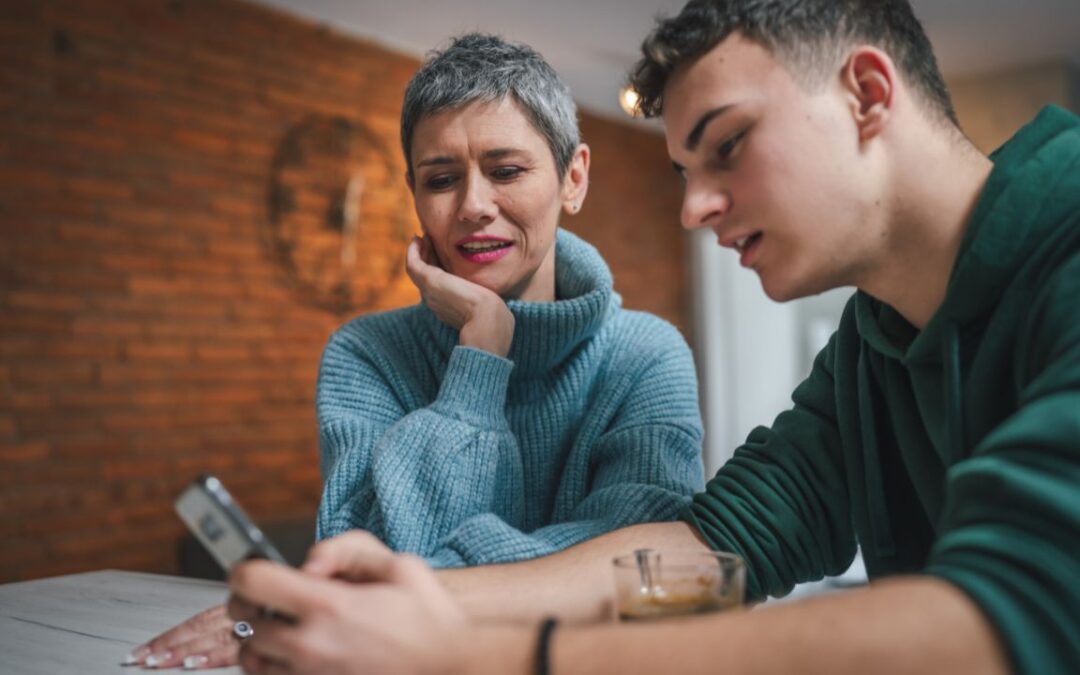
I never expected to share my son’s experience with gambling. If you had asked me a year ago, I would’ve told you my son was doing great. He’s 20, works full time, makes good money for his age and has a solid group of friends. From the outside, everything looked fine.
But last August, we started noticing financial activity that didn’t make sense. Everyone in our family has accounts at the same bank, and my husband could see transactions across accounts. He saw that our son had been moving money around — taking a few hundred dollars at a time from his sister’s account and putting it into his. He hadn’t told anyone about this so it caught us off guard. That’s when things started to click: this wasn’t just a phase or a few bad decisions. This was a gambling problem.
All of this caught me by surprise. I had no idea my son was gambling, and on what and how often. I learned that he’d been gambling on many thing: sports betting, online casinos, blackjack, poker, slots and even occasionally Keno and dice games. Most of it happened right on his phone.
Looking back, I can see the signs now — the lying, the secrecy and the irritability when he wasn’t gambling. He told us he’d tried to cut back and couldn’t, and that he was thinking about gambling all the time — whether chasing the last loss or planning the next bet. He also indicated that he needed to bet more and more to feel the same excitement.
As a parent, this was hard to wrap my head around. You replay everything in your head and wonder how you missed it and how maybe you could have stopped it sooner.
The truth is, this is everywhere now, something I hope more parents understand. Gambling isn’t just something that happens in casinos anymore. It’s in your kid’s pocket. It’s online, it’s tied to sports, it’s woven into games. My son told me he placed his first bet at 16 — and he’s not alone. The kids he hangs out with, mostly 20- and 21-year-olds, are all doing it. It’s just normal to them. That makes me angry, honestly. There’s so little awareness of how easy it is for this to spiral.
Once we understood what was happening, we acted quickly. We went to the bank and removed his access to our family accounts. We set up alerts so we’d know when deposits hit. We started paying closer attention.
Then I searched for help. I typed “what to do with underage gambler” into my computer, not even knowing if that was the right phrase. That search led me to resources and eventually to the Minnesota Alliance on Problem Gambling. I even attended their conference last fall, just trying to learn anything I could.
Now, my son is taking a big step, meeting with a counselor. That gives me hope, because he’s tried to stop on his own, but couldn’t. He’d make it maybe two weeks, and then he’d be right back at it. This isn’t about willpower. It’s bigger than that.
“Just getting him to the point of seeking help was hard because he was scared of being judged and that it would make him feel worse about himself. I think a lot of young people feel that way. “
Just getting him to the point of seeking help was hard because he was scared of being judged and that it would make him feel worse about himself. I think a lot of young people feel that way. If there’s one thing I’d say to other parents, it’s this: getting help doesn’t make your child weak. It gives them a chance.
We’re still figuring this out as a family. It’s not always easy. My husband sees things more black and white, thinking he should “just stop doing it.” I understand that reaction, but I also see how much shame our son already carries. I’m learning that how we talk about this matters.
I’m also thinking about talking to a counselor myself, just to learn how to support him better. For example, what do I say when I’m at a restaurant and there are pull-tabs on the table? What do I do in everyday situations that suddenly aren’t so simple?
If you’re reading this and feel like something might be going on with your kid, trust that instinct. Ask questions and have the conversations, even if they’re uncomfortable.
If you determine that your child might have a gambling problem, know that you’re not alone. There’s help out there — for your child and for you.
That’s what I’m holding onto right now: hope — and the fact that we finally took that first step forward.
Note: Parents Standing Together, a newly formed group for parents of young people with problem gambling, is an additional resource.
Frequently Asked Questions
What are the hidden signs of a gambling problem in young adults?
Signs can include unexplained financial activity, secretly moving money between accounts, lying, secrecy, irritability when not gambling, an inability to cut back, and needing to bet more and more to feel the same excitement.
What should parents do if they suspect their child has a gambling problem?
Parents should trust their instincts, ask questions, have uncomfortable conversations, and seek professional help and resources like the Minnesota Alliance on Problem Gambling or the newly formed group Parents Standing Together.
Where can parents of young adults with gambling problems find support?
Parents can find support through organizations like MNAPG (MNAPG.org) and newly formed groups like Parents Standing Together (ParentsStandingTogether.org).