For Young Adults

Gambling is everywhere. What does it mean for you?
Gambling can be fun, social and part of hanging out with friends. But sometimes it can start causing problems — for you or someone you care about.
Whether you're wondering about your own gambling or worried about a friend, you don't have to figure it out alone.
Gambling is everywhere. What does it mean for you?
Gambling can be fun, social and part of hanging out with friends. But sometimes it can start causing problems — for you or someone you care about.
Whether you're wondering about your own gambling or worried about a friend, you don't have to figure it out alone.
Worried About a Friend?
What to Look for and How to Talk About It
What is Problem Gambling?
The Basics and Warning Signs
Resources
Tools, Support and Places to Get Help
FAQs
Quick Answers to Common Questions
Worried about a friend?
What to look for and how to talk about it.
What is problem gambling?
The basics and warning signs.
Resources
Tools, support and places to get help.
FAQs
Quick answers to common questions.
Worried About a Friend?
What to Look for and How to Talk About Problem Gambling
Is their gambling affecting you?
If you're here, something probably doesn't feel right. Maybe your friend is gambling more, canceling plans, checking their phone constantly or acting differently. Maybe you're frustrated, embarrassed or simply worried. You don't have to know for sure there's a problem before you check in.
- School or work: Missing classes, falling behind or sleeping through commitments.
- Money: Always broke, suddenly has unexplained cash or seems focused on winning money.
- Relationships: Canceling plans, avoiding friends, lying or being secretive.
- Mood and behavior: More tired, stressed, impulsive, unpredictable or defensive.
- Self-care: Not taking care of themselves like they normally do.
- Other habits: Changes in alcohol, drug or nicotine use.
One sign doesn't necessarily mean there's a problem. But if several things are changing, it may be worth checking in.
People gamble for lots of reasons.
They might want to:
- Connect with friends or fit in
- Make quick or easy money
- Escape stress or difficult feelings
- Have a distraction
- Stay connected to family or friends
- Gamble because it's always been part of their life
Understanding why someone gambles can help you understand what they're going through.
Ready to talk to your friend?
You don't have to diagnose them or fix the problem. Your goal is simply to open the door to a conversation.
Before You Talk
Pick the right moment. Talk one-on-one when they're not actively gambling.
Keep it simple. Think about what you've noticed and what you're concerned about.
Use “I” statements. Try “I've noticed...” or “I'm worried...”
Listen. Give them a chance to talk instead of trying to convince them.
Don't judge. They may not see a problem or be ready to talk.
Be patient. You may need to bring it up more than once.
What Can You Say?
You don't need the perfect words. Try something that feels natural.







If they get angry
You can't control how your friend responds. You can control how you respond.
- Acknowledge it: “I can see this is really affecting you.”
- Set a boundary: “You can be angry, but you can't yell at me.”
- Take a break: “This feels like too much right now. Let's talk later.”
If you feel unsafe, leave the situation and get help.
What is Problem Gambling?
The Basics and Warning Signs




Gambling isn't automatically a problem.
Gambling includes things like sports betting, casino games, poker, lottery games, prediction markets, cryptocurrency and other activities where you risk something of value on an uncertain outcome.
For some people, gambling stays as entertainment. For others, it starts interfering with money, relationships, school, work or everyday life.
Problem gambling is when gambling starts causing harm or becomes difficult to control.
You don't have to lose everything for gambling to become a problem.
Warning Signs
Gambling may be becoming a problem if you:
- Spend more time or money gambling than you planned
- Chase losses or keep gambling to win back money
- Think about gambling a lot
- Hide or lie about your gambling
- Borrow money or use money meant for other things to gamble
- Feel irritable or restless when you try to stop
- Let gambling get in the way of school, work, relationships or things you enjoy
If several of these sound familiar, it may be time to take a closer look at your gambling.
Quick Check
Think about the past 12 months.
Have you become restless, irritable or anxious when trying to stop or cut down on gambling?
- YES
- NO
Have you hidden how much you gamble from family or friends?
- YES
- NO
Have you needed financial help because of gambling?
- YES
- NO
If you answered YES to any of these:
 You may be taking more gambling risk than you can afford.
It may be worth taking a closer look and considering some support.
Please share with a friend if you think they could benefit from this screening.
Resources
Free Tools, Support and Places to Get Help from Problem Gambling
Find What Works for You
You don't have to know exactly what you need before reaching out.
Money
Lutheran Social Services — Financial counseling related to gambling.
GamFin — Financial support from professionals who understand gambling.
Tools
Gamban · BetBlocker · Self-Exclusion · TrueLink · Evive
Tools to help you block gambling, set limits, protect your money or find support.
Talk to Someone
Gamblers Anonymous · SMART Recovery · Gam-Anon — Peer support for people affected by gambling.
Evive — Engage in an interactive community of people who understand problem gambling.
Minnesota Problem Gambling Helpline — 1-800-333-HOPE (4673) OR Text HOPE to 53342
Problem Gambling Providers — Connect with trained gambling counselors.
Campus Mental Health Services — Support available through your school.
Problem Gambling FAQs
What is gambling?
Gambling means risking something of value on an uncertain outcome.
What is problem gambling?
Problem gambling is when gambling causes harm or becomes difficult to control.
Harm from gambling addiction can look like:
- Being unable to pay rent or other bills
- Needing to borrow money
- Withdrawing from friends and family
- Missing class or falling behind in school
- Feeling stressed or overwhelmed about money or gambling
What are the warning signs of problem gambling?
Gambling may be becoming a problem if you:
- Spend more time or money gambling than you planned
- Chase losses or keep gambling to win back money
- Think about gambling a lot
- Hide or lie about your gambling
- Borrow money or use money meant for other things to gamble
- Feel irritable or restless when you try to stop
- Let gambling get in the way of school, work, relationships or things you enjoy
If several of these sound familiar, it may be time to take a closer look at your gambling.
What can increase the risk of problem gambling?
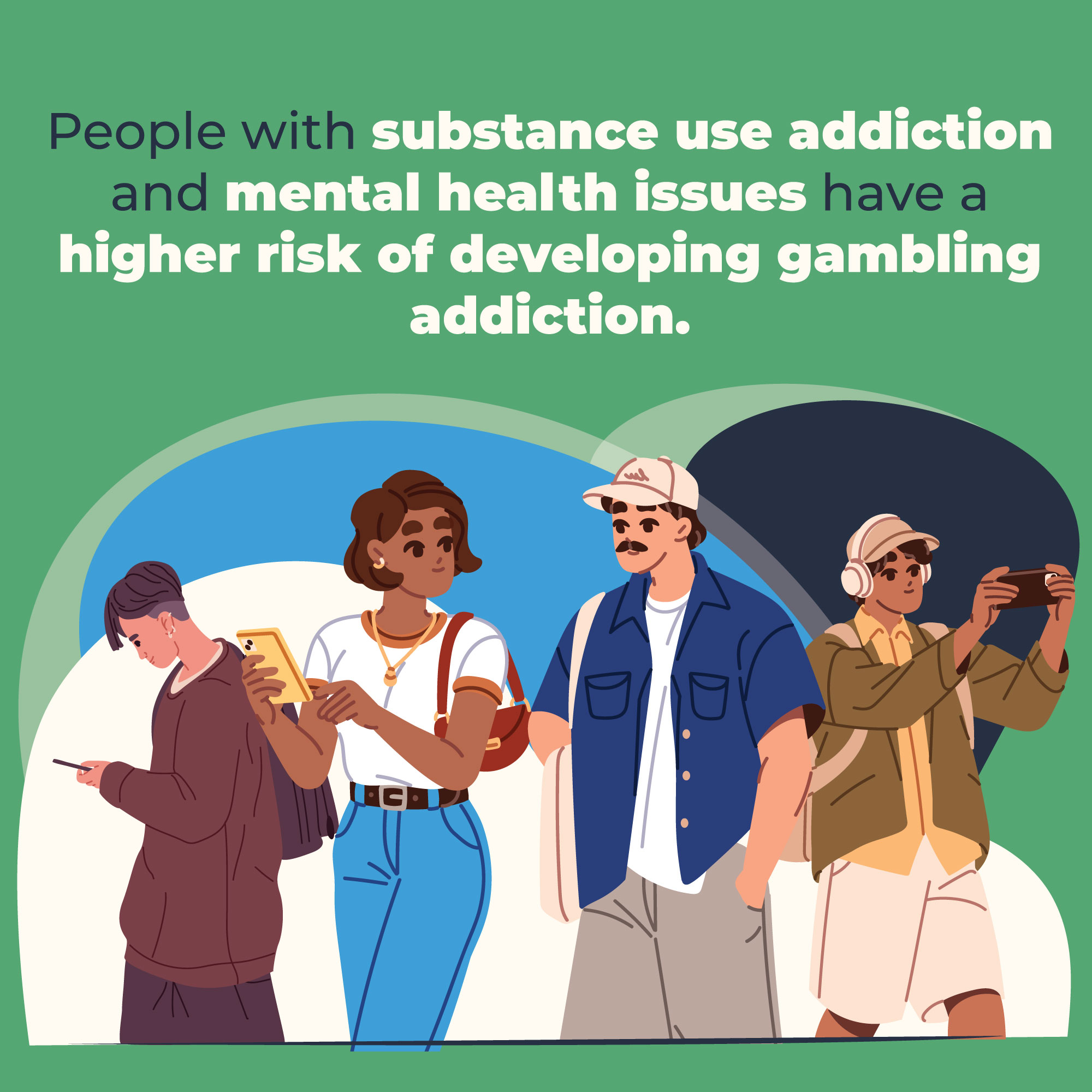
Age, social pressure, risk-taking, alcohol or drug use, family history of addiction and mental-health challenges can increase the risk of problem gambling.
Why don't people get help for problem gambling?
Shame, uncertainty and not knowing where to go can make getting help for problem gambling harder.
What is harm reduction?
Harm reduction means taking steps to reduce the risks or negative effects of gambling.
You Don't Have to Figure It Out Alone
Whether you're worried about yourself or someone you care about, there's no wrong place to start.