NON-CLINICAL PROFESSIONALS
WHAT DO I NEED TO KNOW ABOUT PROBLEM GAMBLING?
Many professionals encounter individuals experiencing gambling-related harm, as well as concerned family members and friends. With a basic understanding of gambling addiction, they can help identify potential problems and connect people with appropriate treatment and support. These professionals include attorneys, bankers, healthcare providers, spiritual leaders and others, as detailed below.
Are You a Trusted Leader Others Turn to for Advice?
Whether you are a community leader, educator, healthcare professional, faith leader or mentor, you may be among the first to notice when someone is struggling. By learning about gambling addiction, you can help identify the signs of a problem and connect individuals and families with the support and treatment they need.
Learning about problem gambling is particularly valuable for:

Attorneys, bankers and other financial advisors are often among the first to see the financial consequences of a gambling disorder. MNAPG provides resources to help these professionals identify gambling-related concerns and guide clients toward appropriate support and financial recovery resources.

Healthcare professionals often screen for tobacco, alcohol and drug use, as well as anxiety and depression, but may not routinely screen for gambling addiction. Asking Ask these 3 questions. can help identify patients who may need support. Gambling disorder commonly co-occurs with substance use and mental health conditions.

Spiritual and trusted community leaders are often in a position to support individuals affected by gambling addiction. MNAPG offers training to help them recognize the signs of gambling-related harm and connect people with appropriate resources and treatment. Register to learn more about gambling addiction.
Corrections officers may work with individuals whose gambling disorder contributed to criminal behavior or who need treatment for a gambling disorder while incarcerated.
Human Resources/Employee Assistance Program managers can help identify employees who may be experiencing gambling-related harm and connect them with available resources and support.
Membership will provide access to
-
The latest information about gambling trends
-
Access to free Monthly NCPG webinars
-
MNAPG’s quarterly newsletter
-
Discounts/scholarships to each organization’s annual conferences and trainings
-
Lend support to both organizations at the state and federal levels
SIGNS OF PROBLEM GAMBLING
Given the subtle nature of gambling problems, how can you identify someone who is at risk for gambling disorder? Here are nine warning signs:
LOSS OF CONTROL
Repeated unsuccessful attempts to control, reduce or stop gambling
ESCAPE
Gambling to escape from problems or feelings (i.e., depression, loneliness, etc.)

CHASING
Try to win back gambling losses with more gambling

TOLERANCE
Need for larger or more frequent wagers to experience the same “rush”
LYING
Lying about the frequency of gambling or amounts won or lost
PREOCCUPATION
Frequent thoughts about gambling experiences (past, future or fantasy)
BAILOUT
Relying on others to relieve a desperate financial situation caused by gambling
WITHDRAWL
Restless or irritable when attempting to cut down or stop gambling
RISKED SIGNIFICANT RELATIONSHIP
Gambling despite risking or losing a relationship, job or other significant opportunity

A Resource You Can Share
When someone is experiencing gambling-related concerns, knowing where to turn for help can be difficult. Evive provides an accessible, digital starting point for people who may be questioning their gambling, looking to make a change or struggling with gambling-related harm.
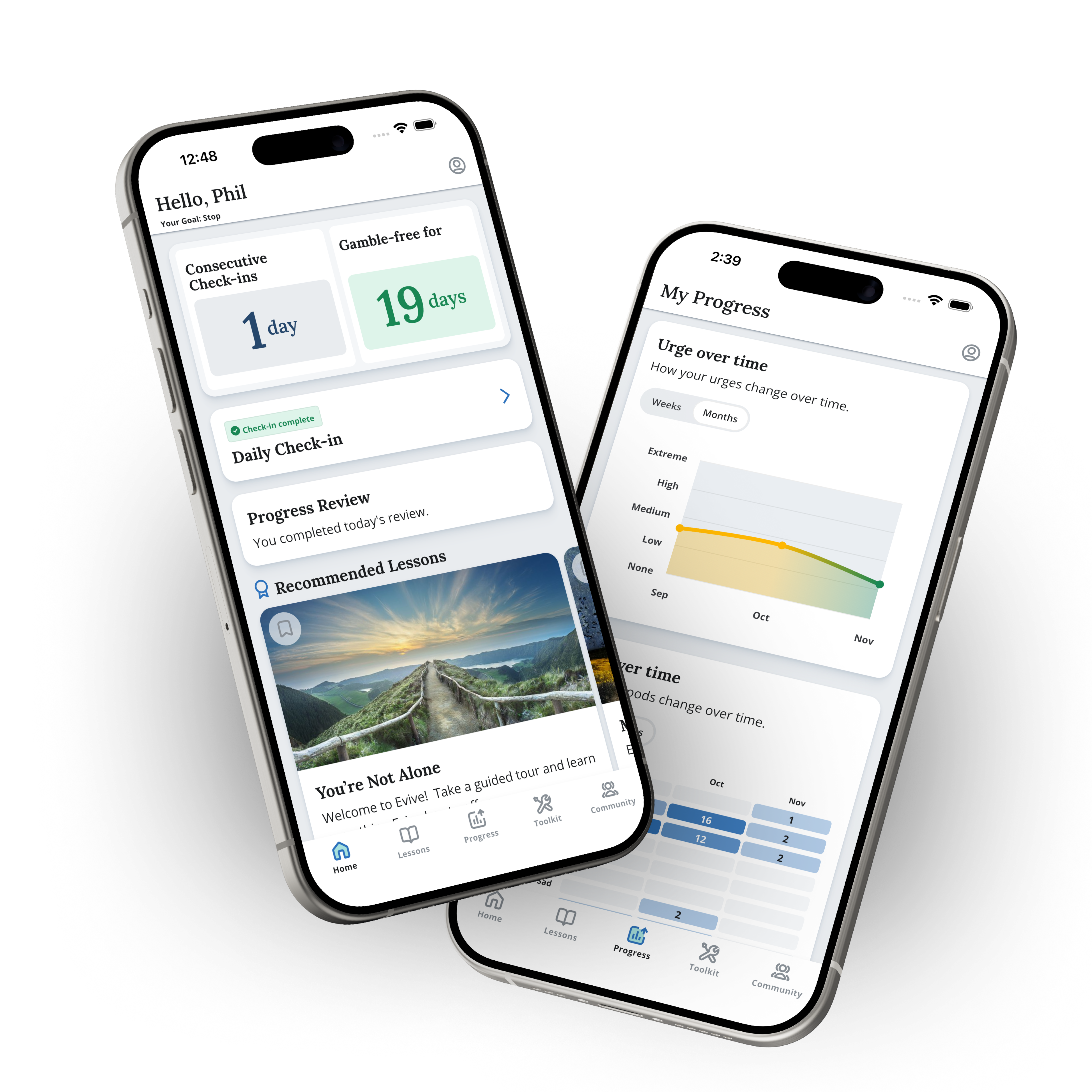
Evive is a free, evidence-informed app that provides personalized tools, education and community support for people across the spectrum of gambling behavior. Users can choose whether their goal is to manage their gambling or stop altogether, and the app adapts to their goals and needs.

Check-Ins
Daily check-ins that help users become more aware of their emotions, behaviors and gambling patterns.

Tools
Practical tools for managing urges, stress and other challenges associated with gambling.

Education
Evidence-informed education developed with gambling and behavioral health experts.

Community
Peer community support where users can connect with others who have experienced gambling-related harm.

Resources
Connections to additional resources, including professional support and community services.
Help Someone Take the First Step
If you work with patients, clients, students, employees or young adults who may be experiencing gambling-related concerns, share Evive as a resource they can access anytime, privately and at their own pace.
Share Evive Today
Gambling disorder can cause significant financial harm, including mounting debt, unpaid taxes, bankruptcy, foreclosure and other serious financial consequences. Because individuals often conceal gambling-related losses, the full extent of the problem may not be immediately apparent.
Attorneys, bankers and financial advisors may notice warning signs that suggest an underlying gambling issue. When gambling-related harm is suspected, early intervention and appropriate financial safeguards can help prevent further damage.
Free financial counseling for individuals and families affected by problem gambling is available. Learn more about financial counseling for gamblers.
Gambling disorder can have serious legal and financial consequences for individuals and their families. In some cases, gambling-related harm may contribute to fraud, theft, embezzlement, bankruptcy, divorce, child neglect, workplace issues and other legal matters.
Attorneys and other legal professionals are often in a position to recognize signs of a gambling problem and encourage appropriate screening or treatment. For some individuals, addressing the underlying gambling disorder may be an important part of recovery and reducing future legal problems.
Free gambling treatment is available for many qualifying Minnesotans. Referrals to state-approved providersare available by calling 1-800-333-HOPE (4673).
Situations That May Suggest a Gambling Problem
- Unexplained debt, frequent cash withdrawals or multiple maxed-out credit cards
- Bankruptcy accompanied by an unexpected lack of assets
- Divorce proceedings involving missing assets, undisclosed debt or financial secrecy
- Child neglect, family conflict or domestic violence
- Co-occurring substance use or mental health concerns
- Suicide attempts or expressions of hopelessness related to financial problems
- Workplace discipline, absenteeism or performance issues linked to financial stress
- Unusual casino activity or unexplained financial losses among vulnerable adults
IIt can be difficult for individuals to separate personal challenges from work life, especially when dealing with physical or mental health concerns. For employees experiencing problem gambling, the impact often carries into the workplace.
Signs an employee may be struggling
An employee with a gambling problem may exhibit:
- Increased stress, irritability or mood changes
- Tardiness, extended breaks or increased absences
- Declining productivity, focus or motivation
- Requests for pay advances or use of leave time
- Borrowing money from coworkers or discussing gambling winnings
- Signs of financial distress, such as collections, garnishments or legal action
- In some cases, theft or misuse of workplace funds
Colleagues are often the first to notice concerns, as individuals may attempt to continue or conceal gambling behavior during work hours.
How supervisors can respond
If you suspect a problem, approach the employee with care and respect:
- Use specific work-related observations
- Speak in a non-judgmental, supportive tone
- Focus on impact, not diagnosis
Respect boundaries and be prepared for denial or defensiveness - Provide information about available resources rather than advice
Workplace policies and prevention
Gambling-related harm can significantly affect the workplace. Clear policies are especially important in organizations that handle cash, operate near gambling venues, allow flexible schedules or support employees in recovery.
Effective prevention strategies include:
- Clear policies addressing gambling, including internet use during work hours
- Employee education on signs of problem gambling
- Access to financial counseling and support resources
- Safeguards and monitoring in roles involving financial transactions or cash handling
- Guidance on workplace gambling activities such as office pools or fantasy sports
MNAPG offers free training for community leaders interested in learning more about problem gambling. Participants are asked to commit time to complete the program.
The training totals 16 hours: 12 hours online, completed at your own pace, followed by a 4-hour in-person session focused on Minnesota’s gambling landscape, discussion and practical application. By the end, participants will have a foundational understanding of problem gambling and access to community resources.
Core topics include:
- The psychology and dynamics of addiction
- Problem gambling and gambling disorder, including prevalence in the U.S.
- Impacts on families and strategies for support
- Financial consequences for individuals and families
- Treatment goals and available options
- The role of spirituality in recovery
- The role of community and spiritual leaders in supporting recovery
- Overview of support groups such as GA, Gam-Anon and Celebrate Recovery
This training is designed to equip spiritual and community leaders to serve as first points of contact for individuals seeking help. It does not train participants to provide therapy, but to recognize concerns and connect people with appropriate resources. Apply for the MNAPG Community Leader Training.
Rule 82
Minnesota requires individuals convicted of certain offenses to be screened for compulsive gambling if it may have contributed to their offense. This requirement, known as Rule 82, is carried out by trained probation officers using the South Oaks Gambling Screen.
As individuals approach their release dates, probation officers administer the screening to assess gambling-related risk. If results indicate a potential gambling disorder, the individual must be referred to a qualified problem gambling counselor for a full assessment and determination of whether treatment is appropriate.
Order Brochures
SELF-HELP PUBLICATIONS
View, download or order a hard copy below (These are meant to be supplemental guides, not a replacement for therapy)
- Your First Step to Change, 2nd Edition. A self-help toolkit of resources to help start the journey toward recovery from problem gambling behavior.
Brochures
- Warning Signs of Problem Gambling (English, Spanish, Chinese, Hmong and Vietnamese)
- What Families Can Do When a Loved One has a Gambling Problem (English and Spanish)
- What is Problem Gambling? (English and Spanish)
- Gambling When in Recovery (English and Spanish)
- Gaming Disorder (English and Spanish)
- Gamban—Block Access to Your Devices (English and Spanish)
- Older Adults and Gambling. When is it a Concern?
- Youth and Gambling
- Lower Risk Gambling Guidelines
- Talking to Your Child About Gaming
(English, Spanish, Chinese, Hmong, Lao and Vietnamese)
Brochures for Professionals
- Be Part of the Solution (English and Spanish)
- Why Screen for Gambling Disorder? (English and Spanish)
Newsletter
- Northern Lights - MNAPG Quarterly Newsletter
Interested in receiving copies of our literature?
View or Request
Request a Presentation
Request a customized presentation for your group